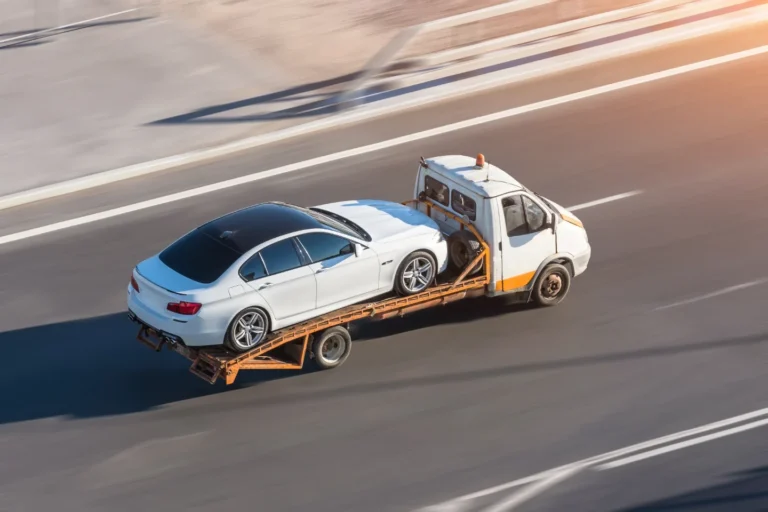
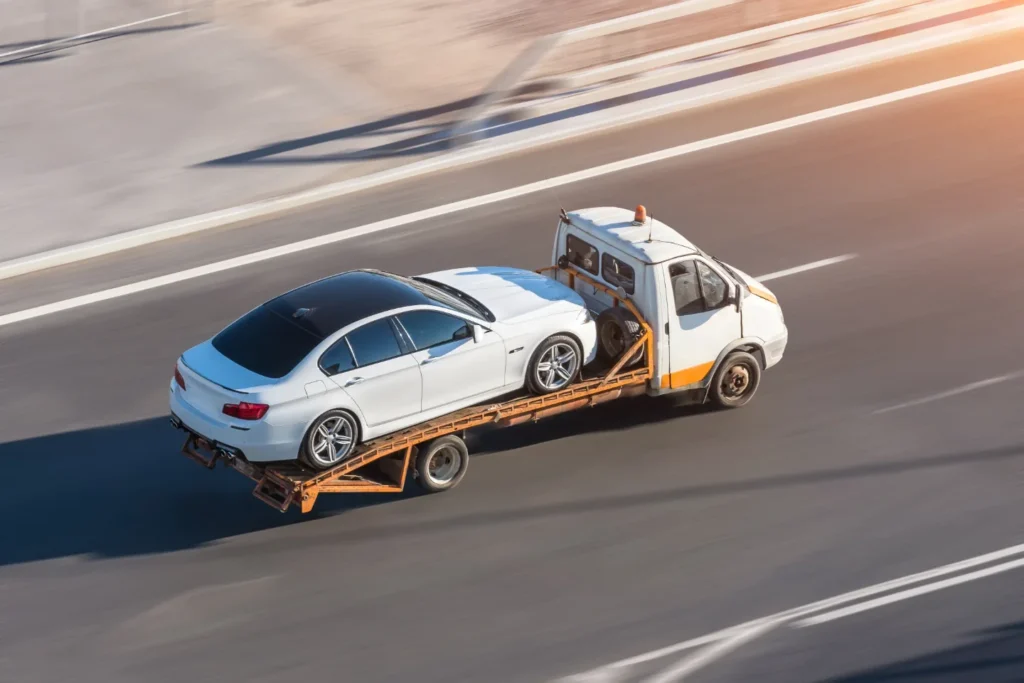
Quick answer: A damaged car can be sold in New Jersey whatever the damage — flood, collision, frame, rust, fire, storm, rodents, vandalism, deployed airbags. Two questions decide what changes: does the damage change the paperwork (has an insurer declared it a total loss and branded the title?) and does it change the collection (does it still roll, and can a flatbed reach it?). For a licensed buyer, damage never stops a sale and pickup is still free. This guide takes each kind of damage and answers both questions honestly, with no damage-to-dollar table, because there is no honest one.
Two questions, every time
| The paperwork question | The collection question | |
|---|---|---|
| What it asks | Has the title been branded, or is there an insurance claim in progress? | Does it roll and steer, and can the truck get to it? |
| Why it matters | A branded title is declared, not hidden; an open claim decides who owns the car | Decides the equipment sent and whether one visit is enough |
| Who answers it | You, from the title and your insurer | You, by looking at the car |
What New Jersey actually brands
Before the damage types, the title rule they all sit under. New Jersey’s salvage regulations, N.J.A.C. 13:21-22, define a salvage motor vehicle as one “reported stolen or damaged to such an extent that it is economically impractical to repair.” The MVC’s salvage page puts it as a vehicle “wrecked, destroyed or damaged to such extent that the insurance company considers it uneconomical to repair it.” When that happens, the title is reissued as a salvage title. Where a vehicle is beyond safe repair at any sensible cost, the MVC issues a junk title. Both are watermarked.
What New Jersey does not have is a separate “flood” brand — the regulation contains no such category. A flood car written off in New Jersey carries a salvage title, not a flood title. If you are looking at a title that says “Flood”, it was branded by another state, and the brand travels with the car.
The practical rule for sellers: a branded title does not prevent a sale. It has to be declared. A buyer needs to know because it changes what they can do with the vehicle, and an undeclared brand discovered at pickup is the fastest way to have an offer revised on the driveway.
Flood damage
Paperwork: If the insurer paid a total-loss claim, the title is salvage-branded — see above. If you had no comprehensive cover, or the water was below the claim threshold, the title is unchanged and the damage is simply a condition to declare.
Collection: Flood cars usually roll. What they do not do is start reliably, and they should not be run — water in the intake or oil does progressive damage. Do not try to “dry it out and see”. Declare the water line (below the seats, to the dash, over the roof) and whether it was fresh or salt water; the shore’s brackish flooding is harder on wiring and metal than inland rain flooding.
New Jersey’s coastal and river flooding produces these cars in batches after every major storm. A buyer handles them routinely.
Collision: front, rear, side, highway
Paperwork: Follows the insurance outcome. A total-loss settlement brands the title; a repaired-and-driven car, or an uninsured collision, does not. If the claim is still open, resolve it before selling — until it settles, the insurer has an interest in the vehicle and may take it as part of the payout. See title problems if the insurer holds the title.
Collection: The question is whether the wheels turn and the car can be steered. Front-end damage often means it cannot be steered; a rear-end hit often leaves it rolling fine. A car with a crushed corner that will not roll is a winch and skates job. Say which.
Frame damage
Paperwork: Frame damage is the classic total-loss trigger because straightening a unibody is rarely economic. Expect a salvage brand if it went through insurance.
Collection: Usually rolls, may not track straight. Frame-damaged vehicles are valued on metal and whatever parts survived away from the impact; the drivetrain is often intact and that matters to the buyer. See what a junk car is worth for how recoverable parts figure into an offer.
Rust: road salt, undercarriage, shore air
Paperwork: None. Rust is never an insurance event and never brands a title. It is purely a condition.
Collection: This is where rust bites. Corroded brake components seize; rusted floors and subframes can make jacking points unsafe; a car that has sat on salted ground for years frequently will not roll. Describe it — a driver who knows to bring skates finishes in one visit.
New Jersey rusts cars two ways: road salt from the north on anything driven through winters, and salt air along the shore on anything parked near it. A shore car with a solid engine and a rotten underbody is a common combination, and it is a parts-and-metal car rather than a resale car. Rust is also the most frequent cause of a failed inspection in the state, which is often the moment the decision to sell arrives; see inspection failures and what they do and don’t stop.
Storm and tree damage
Paperwork: A tree through the roof is a comprehensive claim if you had the cover, and often a total loss on an older car. Then it is a salvage title. Without comprehensive cover, no brand.
Collection: A crushed roof can pin the doors, but the car usually rolls. The complication is where it is: if the tree is still on it, or it is in a position the storm put it in, say so. The truck cannot lift a tree.
Fire
Paperwork: Fire damage is nearly always a total loss if insured. An engine-bay fire that was put out early leaves a different car from one that burned through the cabin; both are salvage-branded if the claim was paid.
Collection: A burned car is a metal-only car, and a badly burned one may have compromised structure. Tell the buyer how much of it burned. Fire-damaged vehicles need to be handled with the fluids and residues in mind, which is a reason to use a licensed recycler rather than anyone offering to “take it off your hands”.
Interior water and mould
Paperwork: None unless it was a flood claim. A leaking seal that filled the footwells over a winter is a condition, not an event.
Collection: No effect. The car rolls and starts or it does not for other reasons. Mould does reduce what a buyer can recover from the interior, which for most junk cars is not much anyway.
Rodent and wiring damage
Paperwork: None. Some comprehensive policies cover rodent damage; most owners of an older car discover it is not worth claiming.
Collection: A chewed harness often means the car will not start, and occasionally means it cannot be put in neutral. Say whether it rolls. Rodent damage is a frequent finding in cars that sat through a New Jersey winter, and it is usually the reason a “dead battery” turns out to be more.
Vandalised or stripped
Paperwork: Vandalism is a comprehensive claim; theft of parts is too. If it was claimed and totalled, the title is branded. If the car was simply found stripped, the title is unchanged.
Collection: Depends entirely on what is missing. Wheels gone means it does not roll. Steering column damaged means it does not steer. Declare what has been taken, and most importantly whether the catalytic converter is still fitted — it is the single part whose absence most changes an offer, and it is the part most often stolen. See selling a non-running or stripped car.
Airbags deployed and total-loss status
Paperwork: Deployed airbags very commonly tip a repairable-looking car into total loss, because the modules, sensors, dash and steering wheel all have to be replaced with correct parts. If the insurer totalled it, the title is salvage. If you kept the car after the settlement — owner-retained salvage — you have a branded title and a vehicle that cannot be registered until repaired and inspected. That is sellable as-is to a licensed buyer.
Collection: Deployed airbags do not affect loading. What does is whatever caused them to deploy.
What none of this changes
- Pickup is still free. Damage changes the equipment, not the price of collection, for a licensed buyer.
- Non-running is still fine. Nothing above needs the car to start.
- The seller’s paperwork is the same. Title in your name, matching ID, lien release if financed, plates off before it goes. See the plate surrender guide for the order after the sale.
- No inspection is needed to sell. A damaged car does not have to pass anything to change hands.
What to declare, in one list
- What happened and when.
- Whether an insurer was involved and whether the claim is settled.
- Whether the title is branded, and what it says.
- Does it roll? Does it steer? Are the wheels on?
- Is the catalytic converter fitted?
- Where it is and what is around it.
Answer those and a buyer can give you a firm figure that survives the driver’s arrival. CashSellCar buys damaged, wrecked, flood, fire and salvage-titled vehicles across New Jersey and nationwide from our office in Jacksonville, Florida, collects by flatbed at no charge, and pays at collection. Get a free, no-obligation offer or call 844-512-0697.
Sources
- NJ MVC — Salvage/Rebuilt Vehicles
- N.J.A.C. 13:21-22 — Salvage Certificates of Title (regulation)
Related New Jersey guides
All six guides are linked from the New Jersey hub. We collect statewide, including the shore towns around Toms River, and Newark and Camden.
Ready to see what your car is worth?
Get a real online offer with free towing and no obligation.
Get my instant offer