
Quick answer: When you sell a car in New Jersey, the plates do not go with it. The MVC’s rule is direct: “If you sell a vehicle and do not transfer its plates to another vehicle, you must surrender the old plates.” Take them off before the car leaves, hand them in at any MVC agency or mail them, keep the surrender receipt, and only then cancel the insurance. Do it in that order and nothing comes back to you. Do it in the wrong order and the MVC’s Uninsured Motorist unit will open a suspension against your driving privilege.
Why New Jersey cares about the plates
In New Jersey the registration and the plates stay tied to you, the registered owner, until the MVC is told otherwise. New Jersey law requires the registered owner to maintain liability insurance on a registered vehicle, and insurers report cancellations to the MVC automatically. If the MVC sees a cancelled policy against plates that are still active in your name, it does not know you sold the car. It sees an uninsured registered vehicle, and it acts on that.
Surrendering the plates is how you tell the MVC the vehicle is no longer yours to insure. That is the whole reason the step exists, and it is why the sequence below matters more than any single item in it.
The order to do it in
| Step | What you do | Why this position in the order |
|---|---|---|
| 1 | Sign the title and write the bill of sale | The buyer needs both to transfer within 10 working days |
| 2 | Take the plates off before the car moves | Plates that leave on the car can be used under your name |
| 3 | Surrender the plates to the MVC | This is what ends your registration |
| 4 | Get and keep the surrender receipt | Your proof if any charge is later linked to those plates |
| 5 | Cancel the insurance | Only after step 3 — cancelling first triggers a suspension |
| 6 | File the paperwork away for a year | Tolls, tickets and insurance queries arrive late |
Step 1 — The title and bill of sale
The MVC’s transfer page sets out the seller’s side plainly. You sign the seller’s section on the reverse of the title and hand it to the buyer, along with a bill of sale showing the buyer’s name and address, the date of sale, the odometer reading, and the price. The buyer then has 10 working days to transfer the title at an MVC agency; the MVC quotes a $25 penalty for missing that window. The standard title fee is $60, or $85 if the vehicle is financed.
The bill of sale matters to you as much as to the buyer. New Jersey does not have a separate seller’s “notice of sale” form the way some states do — your signed bill of sale is your dated record that the car stopped being yours. If the paperwork itself is the problem (no title, a lien, a deceased owner, two names), see our New Jersey title problems guide before you do anything else.
Step 2 — Take the plates off first
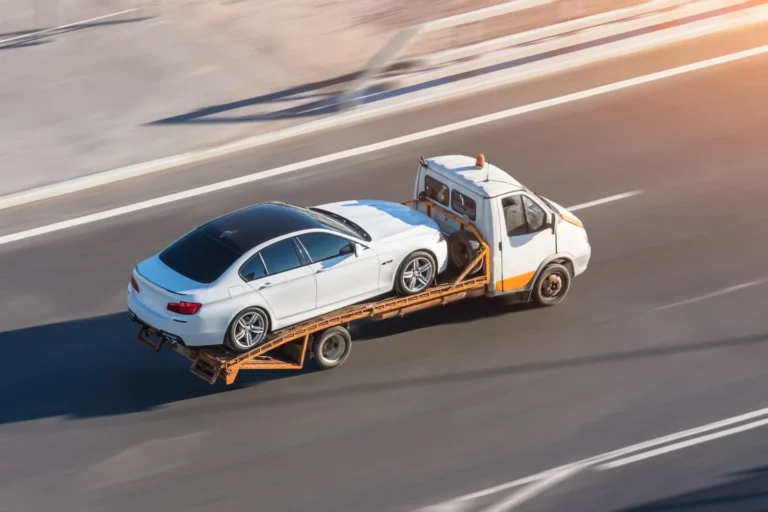
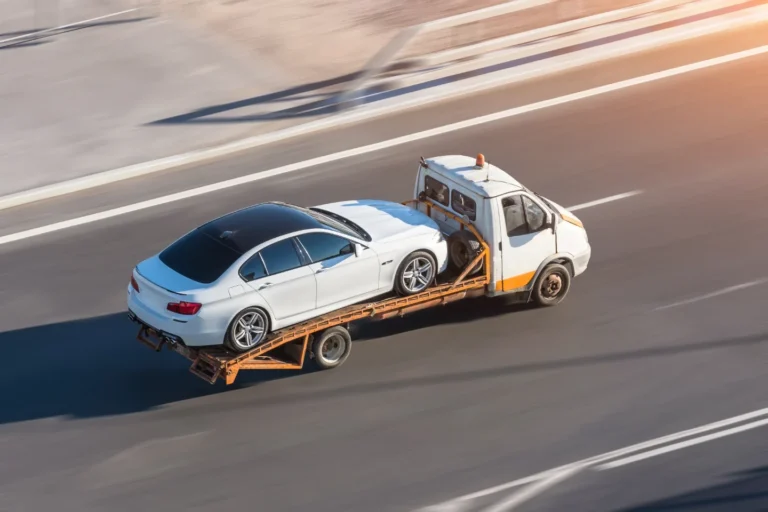
Remove both plates before the vehicle leaves your driveway, whether it is being driven away by a private buyer or winched onto a flatbed. A plate that departs on a car you no longer own can generate toll violations, parking tickets and camera citations against your name for as long as it stays on the vehicle, and every one of those is easier to prevent than to dispute.
If you are transferring the plates to another vehicle you own, you keep them and handle the transfer at the agency. Otherwise they go back to the MVC.
Step 3 — Where and how to surrender
The MVC accepts plates two ways:
- In person at any MVC agency. Hand them to staff or use the plate drop box outside the building. The MVC is specific that plates cannot be surrendered at inspection stations.
- By mail to one of the MVC agency addresses listed on its plates page. Include a self-addressed, stamped envelope — that is how your receipt comes back to you.
No form is required for a straightforward surrender. The receipt is the document.
Step 4 — The surrender receipt, and why you keep it
After surrender the MVC mails you a receipt as proof. If you need it immediately — the usual reason is clearing a suspension that has already been opened — tell the greeter desk when you hand the plates in and ask for it on the spot.
The MVC’s own advice is to keep the receipt “in case any charges are mistakenly linked to those plates later.” Keep it with the bill of sale. Between them they answer almost every question that arrives after a sale.
Step 5 — Cancel the insurance after, not before
This is the step people get wrong, and it is the one the MVC enforces. If you cancel the policy while the plates are still registered to you, your insurer reports the cancellation, and the MVC’s Uninsured Motorist Enforcement unit issues a suspension notice against you as the registered owner. The MVC’s FAQ describes exactly this: “Your vehicle was identified through an insurance carrier as having dropped coverage or cancelled the policy.”
Surrender first, receipt in hand, then call the insurer. Done in that order, there is no gap for the MVC to see.
If a suspension has already been opened
If you cancelled early and a notice has arrived, the MVC’s FAQ lists what clears it when you no longer own the vehicle. Any one of these:
- A copy of your plate surrender receipt, after surrendering the plates in person or by mail to NJMVC, PO Box 132, Trenton, NJ 08666-0129;
- A completed Vehicle Registration/Plate Status Form (RSC-6) stating what happened to the vehicle and the plates;
- If the car was junked, a junk receipt on the buyer’s company letterhead showing the VIN and the date it was junked;
- If it was a total loss, the total-loss paperwork from your insurer — the MVC states that mechanic estimates, towing receipts and market-value assessments are not accepted;
- Proof it was registered in another state, or lease-termination or repossession paperwork where those apply.
Submit by email to UM.INFO@MVC.NJ.GOV, by mail to the Uninsured Motorist Unit at PO Box 132, by fax, or in person at a regional office in Trenton, Eatontown, Newark, Paterson or West Deptford. The MVC quotes 5–7 working days to process, and recommends certified mail or email so you have proof of receipt.
The MVC does not publish a flat fine for this on the pages above, so we are not going to invent one. What it does say is that the suspension stands until cleared — and that is the cost.
Out-of-state plates on a car sold in New Jersey
The MVC only takes New Jersey plates. If the vehicle still carries plates from another state, they go back to that state under its rules, not to an NJ agency. The one thing that does not change is the instruction to remove them before the car leaves — a foreign plate on a car you sold is the same exposure as a New Jersey one.
What happens to the title after CashSellCar collects the car
When you sell a vehicle to us, the title is assigned to us at pickup and the car goes for recycling or salvage. New Jersey’s title rules deal with this end of the process specifically: the MVC issues a junk title only where a vehicle is inoperable or cannot be made safe except at a cost exceeding its value, and both salvage and junk branded titles are watermarked. That branding is what happens to the car’s paperwork after it leaves you; it is not something you have to do.
What you should ask us for — and what any licensed buyer should give you — is a dated receipt on company letterhead showing the VIN. The MVC accepts exactly that as proof the vehicle was junked. Keep it with the plate receipt. CashSellCar buys vehicles across New Jersey and nationwide; our office is in Jacksonville, Florida, and collection in New Jersey is by flatbed at no charge.
Where this goes wrong in practice
- Cancelling insurance the day of the sale, before the plates reach the MVC.
- Leaving the plates on for the tow “because the driver said it was fine.” Take them off.
- Dropping plates at an inspection station. They cannot accept them.
- Mailing plates without the return envelope, then having no receipt when a query arrives.
- Throwing away the bill of sale after the buyer transfers. Keep it a year.
Related New Jersey guides
The New Jersey hub links every guide in this set. The ones that touch this page directly: title problems (no title, liens, inherited cars), New Jersey vehicle laws and municipal rules, and what a junk car is worth in New Jersey. The MVC’s regional offices for insurance matters sit in Newark, Paterson and Trenton.
Sources
- NJ MVC — Plates: surrendering plates
- NJ MVC — Transferring vehicle ownership
- NJ MVC — Uninsured Motorist Enforcement FAQ
- NJ MVC — Vehicle Registration/Plate Status Form (RSC-6)
- NJ MVC — Salvage/Rebuilt vehicles
Selling a car that no longer runs, failed inspection or has been sitting? Get a free, no-obligation offer or call 844-512-0697. We tow free anywhere in New Jersey and hand you the receipt the MVC asks for.
Ready to see what your car is worth?
Get a real online offer with free towing and no obligation.
Get my instant offer