
Quick answer: New Jersey has state law for abandoned vehicles, state law for inspection and insurance, and state law for towing — and leaves inoperable cars on private residential property largely to municipal ordinance, which varies town by town. This guide sets out what the state rules actually say, with the statute or the MVC page for each, and is honest about where the answer is “check your municipality.” The one thing none of these rules do is stop you selling a non-running car to a licensed buyer. An expired sticker, a failed emissions test, lapsed insurance or a nuisance notice are all reasons to sell, not obstacles to it.
Abandoned vehicles: the two statutes
The MVC’s abandoned-vehicle page separates the cases by where the car is.
On public property — the MVC states that “a vehicle is considered abandoned if it has been in the same public location for at least three consecutive days,” governed by N.J.S.A. 39:10A-1 et seq. Such vehicles “must either be offered for sale at public auction or junked” by the public agency that takes them. This is the law under which a municipality or the police remove a car left on a street.
On private property — governed by N.J.S.A. 39:4-56.6. The MVC’s published procedure (form packet OS/SS-138) is long and deliberately so, because it ends with someone else’s car being sold. In outline: a lien search (form DO-22, $15); a notarised statement of how you came to have the vehicle; notice to the local police by certified mail; a 90-day notice (OS/SS-139) to the owner and any lienholder by certified mail; a 5-day notice (OS/SS-140) of the auction; newspaper publication twice over two consecutive weeks; photographs and a VIN tracing; and only then does the MVC issue OS/SS-137, which allows the sale. The MVC’s Special Title Unit is on 609-341-5718.
What this means if a car has been left on your land: you cannot simply have it hauled away and sold. The statute protects the absent owner and the lienholder, and skipping the notices exposes you. What you can do quickly is report it to the municipality, which has its own powers over nuisance and code matters.
Inoperable cars on residential lots: municipal, not state
There is no single New Jersey statute that says how long a non-running car may sit on your own driveway. That is regulated by municipal property-maintenance and zoning ordinances, and they genuinely differ: some towns limit unregistered vehicles in view of the street, some require inoperable vehicles to be garaged or screened, some set day limits, and some enforce only on complaint.
We are not going to quote example ordinances here because we have not verified them against each municipality’s current code, and an out-of-date citation is worse than none. What holds everywhere: the ordinance is enforced by the local code or zoning officer, the first step is usually a written notice with a compliance period, and fines follow non-compliance. If you have received one, the deadline on the notice is your timeline. Selling the car before it expires ends the matter.
Non-running cars on the street
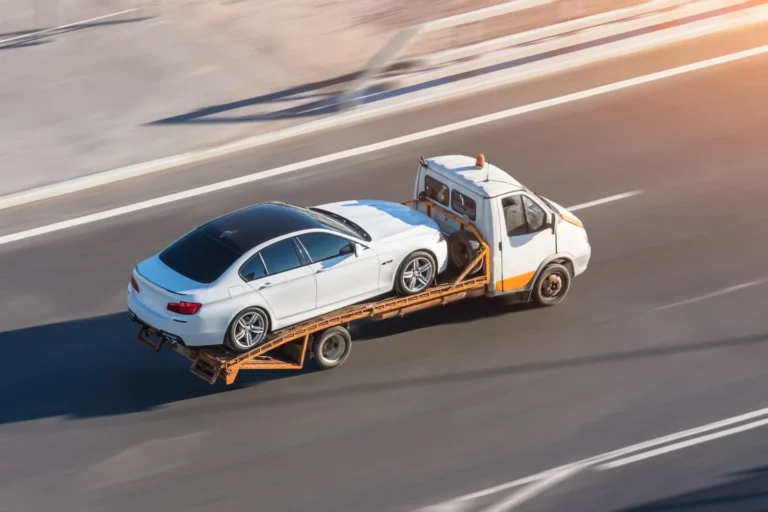
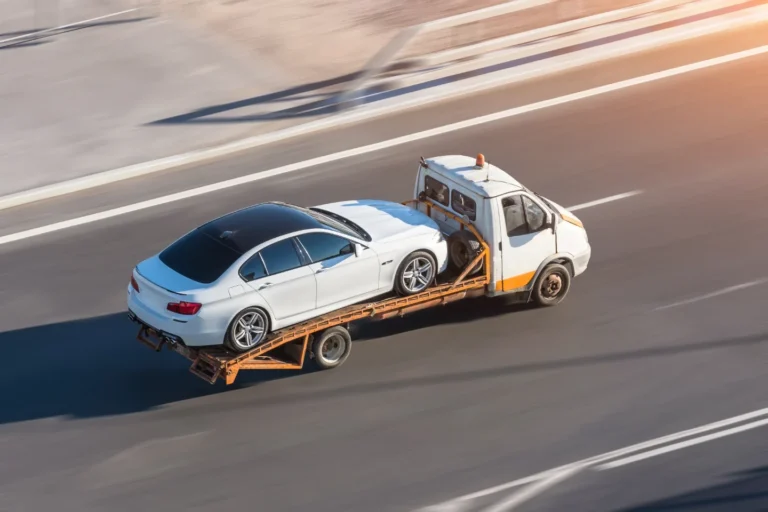
A car left on a public street that does not move falls under the public-property abandonment rule above — three consecutive days in the same location, per the MVC — and under any local street-parking ordinance (alternate-side, street cleaning, 48-hour limits) the town enforces. Once it is towed to an impound, storage charges accrue daily and the municipality’s auction-or-junk process starts. Do not let a car you intend to sell reach that point: a flatbed collection from your driveway costs you nothing; recovering an impounded vehicle does not.
Keeping an uninsured non-running car
New Jersey requires the registered owner to maintain liability insurance on a registered vehicle; the MVC’s Uninsured Motorist Enforcement FAQ describes how insurers report cancellations and how a suspension follows. The requirement attaches to the registration, not to whether the car runs.
If you intend to keep a dead car on your property without insuring it, the lawful route is to surrender the plates first, then cancel the policy — the sequence in our plate surrender guide. Cancelling insurance on plates that are still active is what generates the suspension notice.
Inspection: what New Jersey actually tests
This is widely misunderstood, so here is what the MVC’s inspection FAQ says. For ordinary gasoline passenger vehicles, New Jersey runs a biennial emissions-only test — an OBD2 readout of the car’s own diagnostic system. There is no periodic mechanical safety inspection for private passenger cars; the annual safety-and-emissions inspection applies to commercial-plated vehicles, taxis, limousines, buses and similar classes. New vehicles are inspected at five years, then every two.
Vehicles exempt under N.J.A.C. 13:20-7.2 include gasoline passenger vehicles of model year 1995 and older (GVWR 8,500 lb or less). The MVC notes that exempt vehicles must still keep their emissions equipment in place and working.
Failed emissions
On a failure the inspector issues an Emission Repair Form and a Vehicle Inspection Report; the report states how long you have to repair and return. Repairs for the retest go through a State-certified Emission Repair Technician. A lit check-engine light is the most common cause of an OBD failure, and a missing catalytic converter is one of the most expensive.
Rust and mechanical failures
Because the passenger-car test is emissions-only, a rusted floor or a bad ball joint does not fail a New Jersey inspection the way it would in a safety-inspection state. It can still make the car unsafe and unsellable to a private buyer, and it is still a reason to sell — but it is not an inspection failure here.
Expired sticker
The MVC’s FAQ is explicit: law enforcement may cite the driver or owner of a vehicle displaying an expired sticker, “which could result in fines between $100 and $200 and/or imprisonment for up to 30 days,” and the MVC may revoke registration privileges under N.J.S.A. 39:8-9. That applies to operating the vehicle. A car sitting on your property with an expired sticker is not being operated.
Does any of this stop a sale?
No. The inspection sticker is a condition of driving on New Jersey roads. A licensed buyer collecting by flatbed is not registering the vehicle for road use, so its inspection status is irrelevant to the transfer. The paperwork for a sale — signed title, bill of sale with odometer — is set out on the MVC’s ownership-transfer page and mentions inspection nowhere. See title problems if the paperwork itself is the issue.
Towing: the Predatory Towing Prevention Act
Non-consensual towing — from private lots and at police direction — is regulated by the Predatory Towing Prevention Act and the Division of Consumer Affairs’ rules at N.J.A.C. 13:45A-31. Among the protections: a private lot may only tow unattended vehicles if a sign of at least 36 by 36 inches is posted at the entrances stating the rules, the towing company and the storage address; a company must release a vehicle that has been hooked but not yet removed on the owner’s request; and fees are capped relative to the company’s consensual rates and to local norms. Complaints go to Consumer Affairs on 1-800-242-5846.
This is the law that applies if your car is towed against your wishes. A collection you have arranged with a buyer is consensual and sits outside it — which is one reason to insist on a firm, written figure with towing included before the truck is dispatched.
Who is licensed to buy your car, and what to check
Another common misconception. Under N.J.S.A. 39:11-2, and as the MVC’s junkyard page states, a motor vehicle junk business or junk yard is no longer required to be licensed by the MVC — that licence ended in 2010. What a yard must hold is a permit or certificate from the municipality approving its location. A yard that also sells vehicles must hold a dealer licence under N.J.S.A. 39:10-19.
So “MVC-licensed junkyard” is not a thing to look for. What is:
- A registered business with a fixed address and a phone number that is answered.
- A dated receipt on company letterhead showing the VIN — the MVC’s Uninsured Motorist FAQ accepts exactly this as proof a vehicle was junked.
- Correct handling of the title: it is assigned to the buyer, not left open.
- For the catalytic converter specifically: under P.L. 2023, c. 56 a core recycler may not buy a converter that is detached from a vehicle unless the seller provides the vehicle’s title, registration, repair receipt or bill of sale. A buyer who wants converters loose, no questions, is operating outside that law.
CashSellCar buys vehicles across New Jersey and nationwide; our office is in Jacksonville, Florida, and we are not a junkyard — we purchase from owners and route vehicles to licensed processing. You get the receipt above at collection.
Environmental rules: fluids and refrigerant
Two rules bear on how a scrapped car must be handled, and both are reasons to use a legitimate buyer rather than anyone offering to “take it away”.
Refrigerant. Under EPA regulations at 40 CFR Part 82, Subpart F (Clean Air Act Section 608), the final person in the disposal chain — a scrap recycler or shredder — must recover the air-conditioning refrigerant before a vehicle is crushed, or hold a signed statement that it was recovered. Venting it is prohibited. There is no exemption for scrapped vehicles; the rule exists because of them.
Scrap-metal handling. New Jersey’s scrap-metal business law (P.L. 2009, c. 8) sets record-keeping requirements on the businesses that take vehicles for metal, and the DEP regulates shredding facilities. Fluids — oil, coolant, fuel, brake fluid — are drained and captured at the processing facility, not in your driveway. You do not have to drain a car before selling it and should not try.
The order to act in if you have received a notice
- Read the deadline on it. That is your timeline.
- Check the title is in your name and whether a lien is printed on it.
- Get a real quote on the car as it stands, with collection included.
- Have it collected before the deadline; take the plates off first.
- Surrender the plates, then cancel the insurance, then tell the code officer it has gone.
Sources
- NJ MVC — Abandoned Vehicles (N.J.S.A. 39:10A-1; N.J.S.A. 39:4-56.6)
- NJ MVC — Procedures for Vehicles Abandoned on Private Property (OS/SS-138)
- NJ MVC — Vehicle Inspection FAQs (N.J.A.C. 13:20-7.2; N.J.S.A. 39:8-9)
- NJ MVC — Vehicle Inspections
- NJ MVC — Uninsured Motorist Enforcement FAQ
- NJ MVC — Junkyard licensing (N.J.S.A. 39:11-2)
- NJ Division of Consumer Affairs — Predatory Towing Prevention Act; N.J.A.C. 13:45A-31
- NJ Legislature — P.L. 2023, c. 56 (catalytic converters)
- US EPA — Safe disposal requirements, 40 CFR Part 82 Subpart F
This is general information with sources, not legal advice. Ordinances change; check your municipality’s current code or its code-enforcement office.
Related New Jersey guides
All six guides are linked from the New Jersey hub: non-running cars, damaged cars, what a junk car is worth. We collect statewide, including Jersey City, Elizabeth and Trenton. Get a free, no-obligation offer or call 844-512-0697.
Ready to see what your car is worth?
Get a real online offer with free towing and no obligation.
Get my instant offer