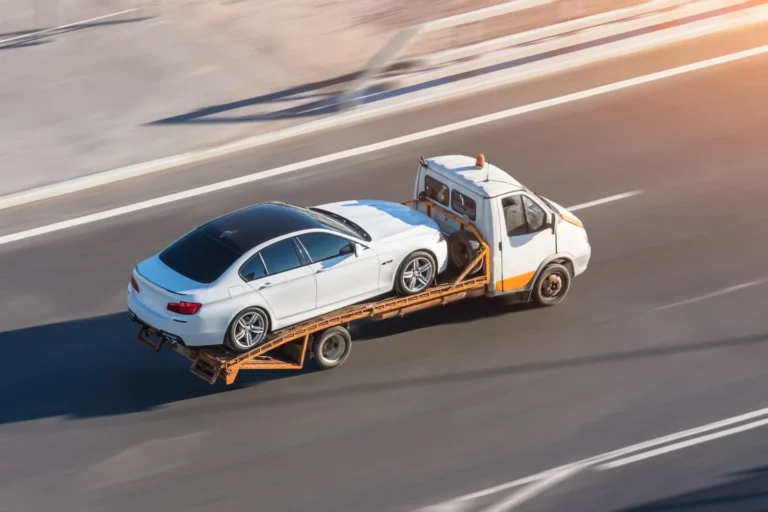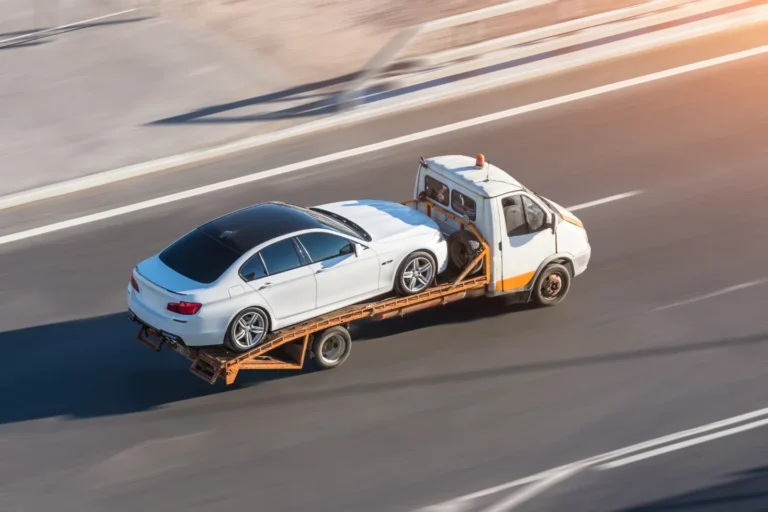

Quick answer: A junk car in New Jersey is worth what a buyer can recover from it — the metal by weight at today’s scrap price, plus any parts still worth pulling, minus the cost of getting it off your property. That is the whole formula. It is why two cars that look identical get different offers, why the number moves month to month, and why nobody who quotes you a figure without asking about the car is telling you the truth. This page explains each factor honestly. The actual number for your car comes from the offer form, because it depends on things only you know.
What a buyer is actually paying for
When a licensed buyer quotes on a non-running or end-of-life vehicle, they are pricing three things and subtracting a fourth:
- Recoverable metal — the car’s weight, and what that steel and aluminium sells for at the recycler this week.
- Recoverable parts — components that can be pulled and resold, if the model has a market for them.
- The catalytic converter — priced separately because of its precious-metal content, and only if it is still fitted.
- Minus the cost of collection — the truck, the driver, the distance, and how hard the car is to load.
Everything else on this page is a detail of one of those four lines.
Weight and metal content
The single largest factor for most junk cars is how much it weighs. A full-size SUV or pickup is worth more as scrap than a compact hatchback for the plainest possible reason: there is more metal in it. Curb weight is public for every model, and it is the first thing a buyer looks up.
The type of metal matters too. Aluminium fetches more per pound than steel, and a vehicle with an aluminium engine block, aluminium body panels or alloy wheels carries more value than its weight alone suggests.
The scrap market moves — and your offer moves with it
Scrap steel is a traded commodity. Its price rises and falls with construction demand, export markets and mill capacity, and that movement passes straight through to junk car offers. A quote in a strong month will be higher than the same car in a weak one. This is not a buyer being inconsistent; it is the underlying price changing.
Practical consequence: a quote is a snapshot. It is usually held for a stated number of days. If you are going to sell, decide inside that window rather than collecting a figure and returning to it two months later.
Mileage and age
For a running car these dominate the value. For a junk car they matter far less than people expect, because the buyer is not going to drive it. Where they still count is in parts demand: a lower-mileage engine or transmission in a car that died of something else is a saleable component, and a very old vehicle may be past the point where anyone wants its parts at all.
Parts demand: which cars are worth more than their weight
Some vehicles have an active used-parts market and some do not. Buyers know which is which, and it is a real difference in what they can pay.
- Pickups, SUVs and vans — heavy, and their drivetrains, axles and body panels are in constant demand from working owners keeping older ones on the road.
- Common models with long production runs — the more of a car that was built, the more people need parts for the survivors.
- Foreign and less common models — can cut both ways. Scarce parts are valuable when someone needs them and worthless when nobody does. Buyers price this conservatively.
- Fleet vehicles — commercial vans and work trucks often have simple, robust components that resell well, and fleets selling several at once can usually arrange a single collection.
Missing parts reduce the offer — especially one of them
A stripped car is worth less than a complete one, and by more than the value of the parts removed, because the buyer now has a harder vehicle to process and less to recover.
The catalytic converter is the part that matters most. It is priced separately from the rest of the car, it has been a theft target across New Jersey, and its absence is the most common reason an offer is revised at pickup. If yours is gone, say so when you ask for a quote. The figure will be lower, but it will be firm. See our note on selling a car with a missing converter.
Missing wheels, a removed engine or transmission, or a car that has been partially parted out should all be declared for the same reason.
Aftermarket parts
Upgraded wheels, exhausts, audio and suspension almost never add to a junk offer. The buyer is not reselling the car as a car, and aftermarket components rarely have the resale channel that OEM parts do. If an aftermarket part has real value, remove it and sell it separately before the car goes — and tell the buyer you have done so.
Location within New Jersey
What we can say truthfully: distance from the collecting truck affects the collection cost, and collection cost is subtracted from the offer. A car in a dense area near a recycler is cheaper to collect than one at the end of a rural road in the northwest of the state or far down the shore. That difference is real but usually modest.
What we are not going to claim is that north Jersey pays more than south, or that coastal cars are worth some fixed amount less. Where the shore does matter is condition: salt air corrodes underbodies and brake components faster, and a car that has spent its life within a few miles of the ocean is more likely to have rust that affects what can be recovered. That is a condition factor, not a postcode factor. See rust and other damage in New Jersey.
Repair or sell: a decision framework, not a calculator
People arrive at this page because a repair quote has landed and they want to know whether to pay it. We are not going to give you a table of made-up figures. Here is how to decide with your own numbers:
| Step | Get this figure | Where from |
|---|---|---|
| 1 | Cost to make the car roadworthy and inspected — everything, not just the headline fault | A written quote from a repair facility |
| 2 | What the car would sell for fixed | Completed sales of the same year, model and mileage — not asking prices |
| 3 | What the car is worth as it stands | A real offer on the unrepaired car |
| 4 | Compare (2 − 1) against (3) | Your own arithmetic |
If the repaired value minus the repair bill is not clearly above the as-is offer, you are spending money to stand still — on a car that will bring the same conversation back next year. That is the honest point at which selling is the rational decision, and it arrives for most older vehicles at their first major failure. See selling a non-running car in New Jersey.
Comparing two offers
Two quotes on the same car will differ, because buyers differ in where they sell metal, which parts they can move, and how far the truck travels. Getting more than one is worth the few minutes it takes. When you compare them, compare like with like:
- Is towing included, or deducted later?
- Is the figure firm against the description you gave, or “subject to inspection”?
- Is payment at collection, or after?
- Is the buyer licensed to handle the vehicle and the title?
A higher headline number that loses towing and gets “adjusted” on the driveway is not the higher offer.
Why an offer can change at pickup — and when it shouldn’t
An offer is made against your description. If the car turns out to differ — the converter is missing, there is no title, the engine has been removed, it will not roll and needs a winch on a slope — a revision is legitimate and any honest buyer will explain exactly what changed and why.
What is not legitimate is a revision when nothing has changed. Quoting high to win the booking, then “discovering” problems on arrival when the seller is committed and the truck is in the driveway, is a known tactic. The defence is simple: describe the car accurately, including the bad news, and get a firm figure against that description in writing before anyone is dispatched. Then a driver who wants to renegotiate has nothing to point at.
The traps, named
- “Up to $X” advertising. The “up to” figure is for a vehicle you do not have.
- Quotes without questions. A buyer who does not ask about the converter, the title and whether it runs has not priced your car.
- Towing fees that appear later. Free collection is standard for junk vehicles. Ask explicitly.
- Payment “once it’s processed”. Payment is at collection.
- No receipt. A licensed buyer gives you a dated receipt on company letterhead with the VIN — the MVC accepts exactly that as proof the vehicle was junked when you clear the registration. See the plate surrender guide.
What does not affect the offer
Expired registration, an expired inspection sticker, a lapsed insurance policy, a dirty interior, and whether the car has been washed. None of these change what can be recovered from it. The title does matter — a buyer needs to be able to take ownership — and our title problems guide covers every route.
So how much is it worth?
That depends on the model, the weight, whether the converter is fitted, what is missing, whether it rolls, where it is, and this week’s metal price. We ask those questions and give you a firm figure against your answers. CashSellCar buys junk, damaged and non-running vehicles across New Jersey and nationwide from our office in Jacksonville, Florida, collects by flatbed at no charge, and pays at collection. Get a free, no-obligation offer or call 844-512-0697.
Related New Jersey guides
Everything in this set is linked from the New Jersey hub. We collect statewide, including Newark, Elizabeth and Toms River.
Ready to see what your car is worth?
Get a real online offer with free towing and no obligation.
Get my instant offer