
Quick Answer: Choosing between a dealership trade-in or a junk buyer in Maine depends heavily on your vehicle’s condition and whether it can pass the rigorous annual safety inspection. If your car is mechanically sound and free of major rust, a dealer trade-in might offer sales tax advantages on a new vehicle purchase. However, if your car has a failed inspection sticker, suffers from severe structural rust due to winter road salt, or doesn’t run, a dealership will likely lowball you or refuse it entirely. In these cases, selling to a specialized junk buyer like CashSellCar offers guaranteed cash, free towing, and a hassle-free process.
Deciding what to do with an aging, high-mileage, or damaged vehicle is a common headache for Maine drivers. Between harsh winters, heavy reliance on road salt by the MaineDOT, and strict annual vehicle inspections enforced by the Maine State Police, cars in the Pine Tree State often age out faster than in warmer climates. When the repair bills start stacking up, or when your mechanic hands you a failed inspection report due to rotted rocker panels or emissions issues, you are faced with a choice: Do you try to trade it in at a local dealership, or do you sell it directly to a junk car buyer?
This guide will break down the realities of both options, explain the Maine-specific trade-in tax benefit, and help you determine whether a trade-in or junk buyer in Maine is the most profitable and logical choice for your specific situation.
The Reality of Maine Car Ownership: Rust, Inspections, and Depreciation
Maine is notorious for being tough on vehicles. To understand why a dealership might reject your old car—and why a junk buyer might be your best option—you have to look at the local environment.
The Impact of MaineDOT Winter Road Salt
To keep roads safe during long, icy winters, the Maine Department of Transportation (MaineDOT) and local municipalities use significant amounts of road salt and de-icing chemicals. While this keeps traffic moving, it is devastating to exposed metal. Over the course of 10 or 15 years, this salt causes severe corrosion on vehicle undercarriages, brake lines, exhaust systems, and structural supports.
The Maine State Police Annual Safety Inspection
Unlike some states that only require emissions testing or have no inspections at all, Maine requires a comprehensive annual safety inspection overseen by the Maine State Police. If your vehicle has significant rust holes, failing suspension components, worn-out brakes, or a check engine light, it will not receive a new sticker.
When a dealership evaluates your trade-in, their primary concern is whether they can resell it on their lot or at auction. If a car cannot pass a Maine safety inspection without thousands of dollars in structural or mechanical repairs, its value drops to near zero for a traditional auto dealer.
Option 1: Trading In Your Car at a Maine Dealership
Trading in your vehicle when buying a new or used car from a dealership is the traditional route. It offers convenience—you drop off your old car and drive away in a new one—but it is only financially viable if your car is in reasonably good condition.
The Maine Trade-In Tax Credit
The biggest advantage of trading in a car in Maine is the sales tax benefit. Maine charges a 5.5% sales tax on vehicle purchases. However, if you trade in a vehicle, the value of the trade-in is deducted from the purchase price of the new vehicle before the tax is calculated.
For example:
- You buy a car for $20,000.
- The dealer gives you $5,000 for your trade-in.
- You only pay the 5.5% Maine sales tax on the $15,000 difference, saving you $275 in taxes.
When Does a Trade-In Make Sense?
A trade-in is usually the better option if:
- The car is less than 10 years old: Newer cars are more desirable for dealer inventory.
- It runs and drives perfectly: No warning lights on the dashboard.
- It has a valid, current Maine inspection sticker: This proves it is roadworthy.
- The body is relatively rust-free: Minor surface rust is okay, but structural rot is a dealbreaker.
The Problem with Trading In an Older or Damaged Car
If your car does not meet the criteria above, taking it to a dealership will likely result in frustration. Dealers do not want cars that require heavy maintenance, tow trucks, or major bodywork. If they do accept a heavily rusted or non-running car on trade, they are likely just shifting numbers around on your financing agreement to make it look like they are giving you money for it, while inflating the price or interest rate on the car you are buying. Furthermore, you must figure out how to get a non-running car to the dealership, which means paying out of pocket for a tow.
Option 2: Selling to a Junk Buyer in Maine
A specialized junk car buyer, such as CashSellCar, operates differently than a dealership. We are interested in the value of the vehicle’s parts and its recyclable scrap metal weight, which means the condition of the paint, the expiration date on the inspection sticker, and the severity of the rust are much less of a concern.
The Advantages of Using a Junk Buyer
- Real Offers: Whether the engine is blown, the transmission is slipping, or the frame is rusted through, a junk buyer will make an offer.
- Free Towing Included: If your car is dead in your driveway or stuck at a repair shop with a failed inspection, a reputable junk buyer will tow it away for free. You never have to pay to move it.
- No Haggling or Trade-In Games: You get a straightforward cash offer for the vehicle. There is no pressure to buy another car or navigate complex financing terms.
- Eco-Friendly Recycling: Junk buyers work with salvage yards that follow Maine Department of Environmental Protection (DEP) regulations to safely drain and dispose of hazardous fluids, batteries, and heavy metals before recycling the steel and aluminum.
Decision Framework: Trade-In vs. Junk Buyer
If you are on the fence about whether to visit a dealer or call a junk buyer, use this simple checklist to guide your decision.
Choose a Dealership Trade-In If:
- [ ] The vehicle has a current, passing Maine inspection sticker.
- [ ] There are no major mechanical issues (engine, transmission, drivetrain).
- [ ] The undercarriage is structurally sound without severe rust.
- [ ] You are actively purchasing another vehicle at that specific dealership.
- [ ] The Kelley Blue Book trade-in value is over $3,000.
Choose a Junk Buyer (CashSellCar) If:
- [ ] The vehicle failed its Maine safety inspection and repairs cost more than the car is worth.
- [ ] The car has severe structural rust from winter road salt.
- [ ] The vehicle does not run, drive, or safely stop.
- [ ] You need the vehicle removed from your property or a mechanic’s lot immediately.
- [ ] You want payment in hand and are not buying a car from a dealership.
- [ ] You do not want to deal with private buyers on Facebook Marketplace or Craigslist.
Step-by-Step: How to Sell to a Junk Buyer in Maine
If you’ve decided that a junk buyer is the best route for your old car, the process is designed to be incredibly simple and fast. Here is how it works with CashSellCar.
Step 1: Request an Offer
Contact us by phone at 1-844-512-0697 or via email at contact@cashsellcar.com. Be prepared to provide the vehicle’s year, make, model, mileage, and a brief description of its condition (e.g., “starts but transmission slips,” or “failed inspection for rusted frame”).
Step 2: Verify Your Title
In Maine, having the proper documentation is essential. Important Note: As of January 1, 2026, the Maine Bureau of Motor Vehicles (BMV) requires a title for all vehicles with a model year of 2001 or newer.
- If your vehicle is 2001 or newer, you must have the title in your name to sell it.
- If you have lost the title, you must apply for a duplicate title through the Maine BMV before you can legally sell the vehicle.
- For vehicles model year 2000 and older, a title is not strictly required by the state, but a valid Maine registration and a bill of sale are necessary to prove ownership.
Step 3: Accept the Offer and Schedule Pickup
Once we provide an offer based on current scrap and parts market values, you can accept it. We will then coordinate a pickup time that works for you. Whether the car is at your home in Portland, a shop in Bangor, or a driveway in Lewiston, we arrange the towing.
Step 4: Prepare the Vehicle
Before the tow truck arrives, remove all personal belongings from the cabin and trunk. Take off your license plates; you will need to return these to your local town office or the BMV to cancel your registration and stop paying excise tax on the vehicle.
Step 5: Get Paid at Pickup
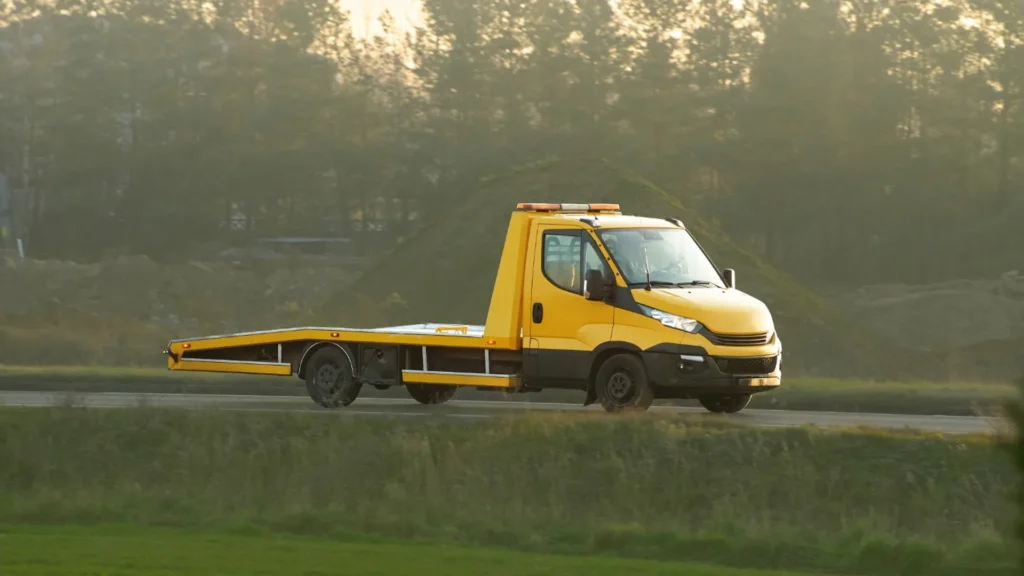
When the driver arrives, they will verify the vehicle’s condition and your paperwork (title or registration). You will sign the title over, hand over the keys, and the driver will pay you the agreed-upon amount. The car is then loaded onto the flatbed and hauled away. For more details on the process, visit our How It Works page.
Repair, Scrap, or Request an Offer?
Sometimes the choice isn’t just between a dealer and a junk buyer; it involves deciding whether the car is worth saving at all.
When to Repair:
If your car failed inspection for minor issues—such as worn tires, a burnt-out headlight, or standard brake pad replacement—and the rest of the vehicle is solid, it is usually financially wise to pay for the repairs. Keeping a paid-off car on the road is often cheaper than taking on a new car loan.
When to Scrap or Sell to a Junk Buyer:
You should strongly consider selling to a junk buyer if you are facing “catastrophic” repairs. These include:
- Blown Head Gasket or Engine Failure: Replacing an engine can cost $3,000 to $6,000.
- Transmission Failure: A rebuild or replacement often exceeds $2,500.
- Rotted Subframe or Unibody: If a Maine inspection mechanic taps your frame with a hammer and it crunches, the car is structurally unsafe. Welding patches is expensive and often a temporary fix.
If the cost of the repair is greater than the vehicle’s market value in running condition, it is a “total loss.” At this point, taking the guaranteed cash from CashSellCar is the smartest financial move.
Frequently Asked Questions (FAQ)
1. Do I have to have a title to sell my junk car in Maine?
Yes, if the vehicle is model year 2001 or newer, the Maine BMV requires a title to transfer ownership. If you have lost it, you will need to obtain a duplicate title from the Bureau of Motor Vehicles.
2. Will a dealership take my car if it has a failed inspection sticker?
Most dealerships will not offer you any meaningful value for a car with a failed inspection, especially if the failure is due to rust or major mechanical issues. They cannot resell it easily. You will almost always get a better direct cash offer from a junk buyer.
3. Do I have to pay for towing if my car doesn’t run?
Not with CashSellCar. If your vehicle doesn’t start, isn’t safe to drive, or is unregistered, we provide free towing from your location in Maine.
4. What happens to my license plates?
You should always remove your Maine license plates before the tow truck takes the vehicle. You can turn them into your local municipal office or the BMV to cancel your registration. This ensures you do not continue to be billed for local excise taxes.
5. How long does the process take?
Once you contact us and accept the offer, we can usually schedule a pickup within 24 to 48 hours, depending on driver availability in your specific area of Maine.
6. Does CashSellCar buy vehicles with severe rust?
Absolutely. We understand the toll that Maine winters and road salt take on vehicles. We buy cars for their recyclable metals and usable parts, so heavy body and frame rust is not a dealbreaker for us.
7. Can I sell an abandoned car left on my property?
You can only sell a vehicle if you are the legal owner. If an abandoned vehicle is on your property, you must go through the proper legal channels with local Maine law enforcement and the BMV to claim ownership before you can sell it to a junk buyer.
Conclusion
Choosing between a trade-in or junk buyer in Maine ultimately comes down to the health of your vehicle. If your car is relatively new, passes state inspection, and is free of structural rust, trading it in at a dealership to take advantage of the sales tax credit makes sense. However, if your car is fighting a losing battle against MaineDOT winter road salt, requires expensive repairs, or has failed its safety inspection, a dealership is not going to give you a fair deal.
In those situations, selling directly to a junk buyer is the most efficient, profitable, and stress-free option. CashSellCar provides transparent offers, handles all the towing logistics for free, and puts cash in your hand without the dealership runaround.
If you are tired of looking at that old car in your driveway or paying storage fees at your mechanic’s lot, reach out to us today.
Ready to get cash for your car?
Call us at 1-844-512-0697 or email us at contact@cashsellcar.com to get your offer today.
Explore more about our services across the state on our Maine area page.
Sources Used for This Article:
- Maine Bureau of Motor Vehicles (BMV): Title requirements and duplicate title procedures.
- Maine State Police: Annual motor vehicle safety inspection rules and enforcement guidelines.
- Maine Department of Environmental Protection (DEP): Regulations regarding the safe recycling and fluid recovery of end-of-life motor vehicles.
- Maine Department of Transportation (MaineDOT): Information regarding winter road maintenance and de-icing material usage.
Ready to see what your car is worth?
Get a real online offer with free towing and no obligation.
Get my instant offer