

Quick answer: To sell a junk or damaged car in Philadelphia, you need a Pennsylvania title in your name and a buyer who arranges towing — you do not need the car to run, be registered, or pass inspection. Philadelphia’s specific wrinkles are the ones that shape pickup: narrow row-home streets, permit parking, one-way blocks, and tight rear alleys. Note where the car sits and how a flatbed can reach it, complete the notarized title assignment, remove your plate, and the sale is straightforward. Philadelphia’s sales tax rate is 8%, the highest in the state.
You Don’t Need to Repair It First
A junk or damaged car in Philadelphia still holds real value in its parts, drivetrain, and scrap metal. Pennsylvania transfers ownership through the title, not through registration or inspection, so a vehicle that has been sitting behind a row home for two years can be sold exactly as it is. Whether it stopped running from a blown engine, a failed transmission, accident damage, or simply years of neglect, none of that prevents a clean, legal sale.
Philadelphia Pickup Realities
This city presents genuine logistical constraints that a suburban driveway does not. Think through the following before you request an offer, because sharing these details up front is what makes pickup go smoothly:
| Local factor | What to note for the tow |
|---|---|
| Row-home streets | Limited curb space; a flatbed needs room to load |
| Permit parking zones | Coordinate timing to avoid conflicts |
| One-way streets | Affects the approach route for a tow truck |
| Rear alleys / driveways | Measure clearance; some are too narrow for a flatbed |
| Garage or basement parking | Height and turning clearance matter |
| Street cleaning schedules | Can restrict the pickup window |
Neighborhood Notes Across the City
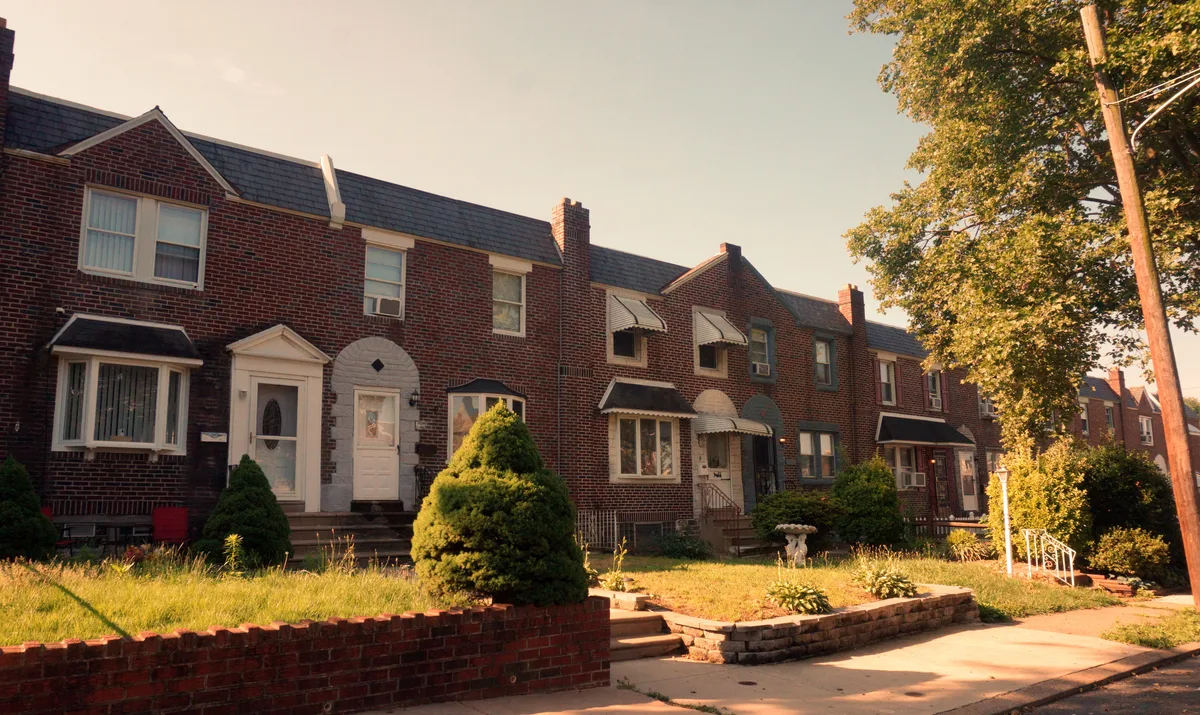
Access varies noticeably by neighborhood. In dense row-home areas like South Philadelphia, Fishtown, and Kensington, curb space and narrow rear alleys are the main constraints — a car parked in a tight alley may need to be winched to the street. In Center City, permit zones, loading restrictions, and garage clearances dominate. In the Northeast and parts of West Philadelphia, driveways are more common and pickup is usually simpler. Wherever you are, describing the exact position of the car — facing which way, how far from the curb, on what grade — lets the right equipment be dispatched the first time.
Step 1: Confirm Your Title
Everything starts here. The Pennsylvania Certificate of Title must be in your name and free of liens. If the car was financed, obtain a written lien release from the lender. If the title is lost, damaged, or was mailed to a previous address, request a duplicate using Form MV-38O from PennDOT right away — the mail turnaround is the most common cause of a delayed sale. Our step-by-step PA title transfer guide covers the full process.
Step 2: The Notarized Assignment
Pennsylvania requires the seller’s signature on the title assignment to be witnessed by a notary public or PennDOT-authorized agent. Fill in the buyer’s details, the odometer reading, the sale price, and the date — but leave your signature blank until you are in front of the notary. Philadelphia has plenty of tag and messenger services that notarize and process the paperwork in a single visit, which is the efficient route. Note that the vehicle itself does not need to be present for this; it is a paperwork transaction, so an immobile car in an alley is no obstacle.
Step 3: Get an As-Is Cash Offer
With your title status confirmed and the location details noted, request an offer based on the year, make, model, and honest condition. CashSellCar’s Cash for Cars Philadelphia service makes offers on junk, damaged, and non-running vehicles and can arrange free towing on eligible accepted offers, subject to vehicle details and pickup access. You can also see the statewide picture on the Pennsylvania hub. The more accurately you describe the car and its position, the firmer the number.
What Your Philadelphia Junk Car Is Worth
Value comes from four places: the vehicle’s weight as a scrap floor, whether it runs, whether the catalytic converter is intact, and whether you hold a clean title. A complete, running vehicle with its converter and title in hand sits at the top of the range; a stripped, heavily rusted car sits near scrap value. Catalytic converter theft is a real problem in the city — if yours was cut off, disclose it up front rather than letting it be discovered at pickup, because it materially changes the offer. Our guide to what qualifies a junk car for a higher offer breaks the tiers down.

Philadelphia’s 8% Sales Tax
One local detail worth knowing: Philadelphia applies an 8% vehicle sales tax — the highest rate in Pennsylvania, compared with 7% in Allegheny County and 6% across the rest of the state. That tax is paid by the buyer based on the reported purchase price, so as a seller it does not come out of your pocket. It matters mainly in that the price you record on the title assignment should be accurate: PennDOT can review reported prices well below fair market value. On a low-value junk car the tax amount is small regardless. Our PA title transfer cost guide shows the full calculation.
Abandoned and Inherited Vehicles
Two situations come up often in the city. A car left on your property by a former tenant or relative is not simply yours to sell — you need documented ownership, and the path depends on the circumstances. An inherited vehicle transfers according to the estate, with the process depending on whether it is probated. In both cases a tag service experienced with unusual title situations is worth consulting, and the vehicle can still be sold once the paperwork clears. What you should not do is transfer a car to anyone who tells you the documentation does not matter.
Why Waiting Costs You Money in Philadelphia
Two forces work against a parked junk car here. First, road salt and winter weather accelerate rust on undercarriages, brake lines, and body panels, steadily reducing the recoverable steel and salvageable parts that determine your offer. Second, a car occupying scarce street parking in a permit zone is an ongoing nuisance and can attract tickets or towing you did not choose. If the vehicle is destined to be sold, doing it sooner protects both your payout and your parking.
On Pickup Day: Checklist
- Have the notarized title assignment ready
- Remove your license plate before the car leaves — PA plates stay with the owner
- Clear all personal items from the vehicle
- Confirm the tow route, curb access, and permit-zone timing for your block
- Keep a copy of the assignment and an as-is bill of sale
- Notify your insurer once the car is gone

Comparing Your Options in the City
Philadelphia sellers have a few routes. A private sale is difficult for a non-running car, since most buyers want something driveable. Donation yields no cash and still requires a title and pickup coordination. Hauling it to a scrap yard yourself means arranging and paying for your own tow through city traffic, and typically nets metal value only. A whole-car cash offer with free towing removes the transport burden, values parts as well as scrap, and handles the logistics — generally the highest-value, lowest-hassle route for a junk or damaged car in Philadelphia.
The Bottom Line for Philadelphia Sellers
Selling a junk or damaged car in Philadelphia is simpler than the car’s condition suggests. You do not need repairs, registration, or an inspection — you need the title in your name and a buyer who tows. The city’s real complications are logistical rather than legal: narrow streets, permit zones, one-ways, and tight alleys, all of which are solved by describing exactly where the car sits when you request the offer. Confirm your title (order a duplicate now if it is missing), complete the notarized assignment, remove your plate, and keep your paperwork. Philadelphia’s 8% tax falls on the buyer, not you. And because salt and time keep eating into what the vehicle is worth, the car sitting on your block today is worth more than it will be next spring.
Cars Parked on the Street vs. Private Property
Where the vehicle sits changes the practicalities more than the paperwork. A car on private property — a driveway, a rear pad, a garage — can generally be collected on a schedule that suits you, with clearance being the only real question. A car on a public street in Philadelphia adds variables: permit-zone rules, street cleaning windows, and the risk that a long-parked, visibly derelict vehicle attracts ticketing or municipal towing before you get around to selling it. If your junk car is street-parked, that is a reason to move sooner rather than later — a car towed by the city becomes a considerably more expensive and complicated problem to unwind than one you sold on your own terms.
Keys, Registration, and Personal Items
A few small things smooth the handover. Locate the keys if you still have them — a vehicle with keys is marginally easier to move and position, though a missing key is not a dealbreaker for a towed car. Check the glovebox, trunk, door pockets, and under the seats for personal items, insurance cards, and old registration documents; once the car leaves, retrieving anything left inside is impractical. And do not leave the title in the vehicle, which is a surprisingly common habit — it belongs with you until the moment you hand it over, notarized, to the buyer.
Frequently Asked Questions
Can I sell a junk car in Philadelphia without repairs?
Yes. Pennsylvania transfers ownership through the title, not registration or inspection. The car can be sold as-is and towed rather than driven.
How does towing work on narrow Philadelphia streets?
Share the car’s exact location, curb access, alley clearance, and permit-zone timing when you request an offer so the right equipment and window can be scheduled.
What is the vehicle sales tax in Philadelphia?
8% — the highest in Pennsylvania, versus 7% in Allegheny County and 6% statewide. The buyer pays it, based on the reported purchase price.
What if I lost the title?
Request a duplicate title (Form MV-38O) from PennDOT before the sale, then complete the notarized assignment to the buyer.
My catalytic converter was stolen — can I still sell?
Yes, but expect a lower offer since the converter is the most valuable single component. Disclose it up front rather than at pickup.
Can you pick up a car from a rear alley or garage?
Usually, if there is safe tow access. Describe the clearance, grade, and how the car is positioned so appropriate equipment is dispatched.
Do I need to be present for pickup?
You or an authorized person should be there to hand over the notarized title and confirm the vehicle, and to coordinate timing on permit-parking blocks.
Is it better to sell now or wait?
Sooner is generally better. Philadelphia winters and road salt accelerate rust, reducing the recoverable steel and parts that determine your offer.
Ready to see what your car is worth?
Get a real online offer with free towing and no obligation.
Get my instant offer

