
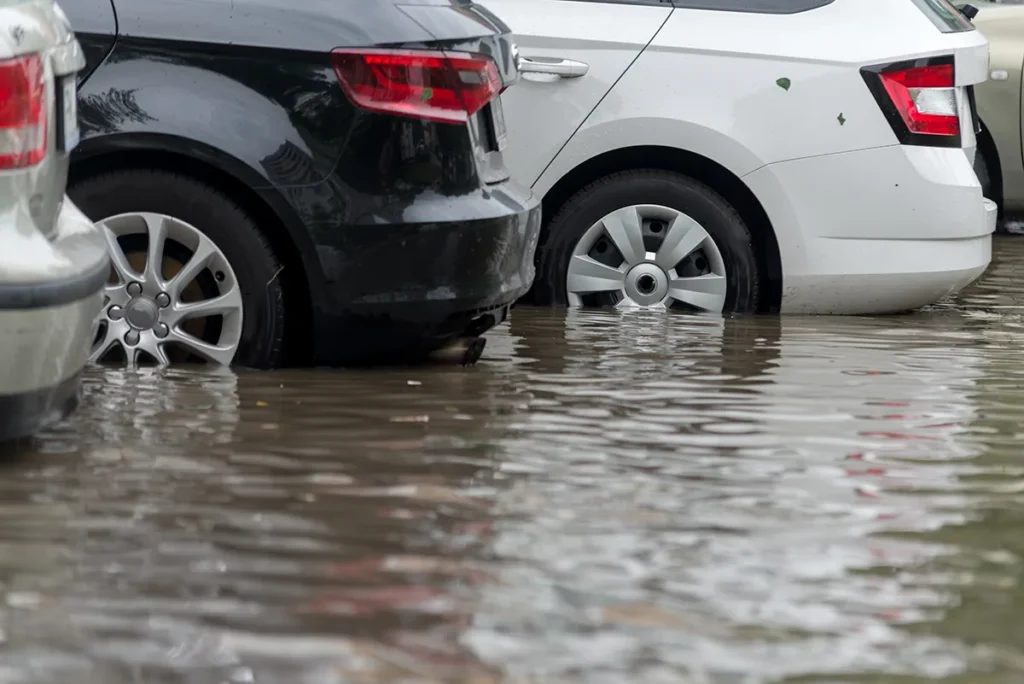
Quick answer: A flood-damaged car in Pennsylvania is usually worth far less than it looks, and repairing one is rarely sensible. Water destroys vehicles progressively — corrosion creeps through wiring looms, control modules fail weeks or months after the event, and contamination in the carpets and seats never fully clears. If an insurer declares it a total loss the title will be branded, and that brand is permanent. You can sell a flood car in Pennsylvania, but you must disclose the damage, and the realistic buyers are recyclers and dismantlers rather than private drivers.
Why Water Is Worse Than It Looks
A car that has been through a flood can dry out and appear normal. That appearance is misleading, and it is the reason flood vehicles have such a poor reputation.
Modern cars contain dozens of electronic control modules and kilometres of wiring, much of it running through the floor and lower body — exactly where floodwater sits. Water wicks into connectors and along wiring insulation, and corrosion then progresses slowly in places nobody can inspect. Faults appear weeks or months later, often intermittently, and diagnosing them is expensive precisely because they are intermittent.
Floodwater is also rarely clean. River and storm water carries silt, sewage, oil and road contaminants, all of which get into the carpets, seat foam and ventilation system. The smell that returns on the first humid day is the most common complaint, and it is very difficult to eliminate.

Fresh Water Versus Salt Water
Both are bad; salt water is considerably worse. Salt is aggressively conductive and corrosive, and it accelerates the destruction of connectors, grounds and body metal.
Pennsylvania flooding is predominantly fresh water — river flooding along the Susquehanna, Delaware and their tributaries, plus flash flooding from heavy storms. That is somewhat better news, but it does not make a submerged car repairable. What matters more is how deep the water got and how long it stayed.
How High Did the Water Reach?
This is the single most useful question, and it maps roughly to outcomes:
- Below the door sills. Often survivable. Brakes and wheel bearings may need attention.
- Into the footwells. Carpets, underlay and some wiring affected. Repairable but smell is likely.
- Up to the seat cushions. Serious. Body control modules and floor harnesses are usually in scope.
- Above the dashboard. Effectively finished. Nearly every electronic system has been submerged.
- Water in the engine’s intake. Potential hydrolock — catastrophic internal damage if it was running.
If you know the water line, you already know roughly where you stand.
Never Try to Start a Submerged Car
Worth its own heading because the instinct is strong and the consequences are permanent. If water has entered the air intake, cranking the engine draws it into the cylinders. Water does not compress, and the result is typically bent connecting rods or worse.
A car that might have been repairable becomes scrap in one turn of the key. If your vehicle has been in deep water, leave it alone and have it assessed.

What the Insurance Route Looks Like
Flood damage is typically covered under comprehensive rather than collision. If you carried comprehensive, report it promptly — delays make it harder to establish what happened and when.
Insurers total flood vehicles readily, because they understand the long tail of electrical problems better than most owners do. If yours is totalled the title is branded, and you may be offered a buy-back. Think hard before accepting: the insurer has concluded repair is uneconomical, and on a flood car they are usually right.
If you carried liability only, there is no flood cover and the loss falls on you. That is the position most owners of older vehicles find themselves in, and it makes the scrap route the practical one.
Your Options Compared
| Water level | Realistic outcome | Best route |
|---|---|---|
| Below sills | Often recoverable | Assess and repair |
| Footwells | Repairable, smell likely | Weigh cost vs value |
| Seat cushions | Electrical damage likely | Usually sell |
| Above dashboard | Effectively total | Sell for scrap |
| Engine hydrolocked | Major internal damage | Sell for scrap |
| Any level, older car | Repair rarely economical | Sell |
Selling a Flood Car Honestly
Disclosure is not optional and it is not against your interests. A branded title is visible to any buyer, and flood damage is detectable to anyone who knows where to look — silt under the carpet, corrosion on seat rails and seatbelt bolts, water lines inside the lamps.
Telling a buyer upfront gets you a real quote. Concealing it produces a lower revised offer at the driveway, or a dispute afterwards. For a recycler the flood history barely affects the price anyway, because scrap value depends on weight and components rather than on whether the electronics work.
What a Flood Car Is Still Worth
More than people expect. The steel is unaffected, the catalytic converter is unaffected, and the wheels are unaffected. Those are the main drivers of scrap value, and none of them care about water.
Where value disappears is in resale as a working vehicle, and in components with electronics in them. See what your junk car is worth in Pennsylvania for how the pieces add up, and catalytic converter value for the largest single component.
Do Not Let It Sit Full of Water
If the car is going to be sold, get it moving rather than leaving it. Standing water accelerates corrosion, mould develops quickly in Pennsylvania summers, and the interior becomes genuinely unpleasant for whoever eventually handles it.
Opening it up to dry is worthwhile even if you are scrapping it — it reduces the smell and makes the vehicle safer to work around. What is not worthwhile is spending money on detailing or repairs before selling to a recycler; it will not change the offer.

Paperwork Is Unchanged
Flood damage does not alter the transfer requirements. You need the Certificate of Title with a notarized assignment, photo ID matching the name on it, and a lien release if the vehicle was ever financed. Remove your license plate before it leaves, because in Pennsylvania the plate belongs to you.
If the insurer has already taken the title as part of a settlement, the vehicle is theirs and there is nothing for you to sell — check before arranging anything.
Mould Is the Health Issue Nobody Mentions
Corrosion gets discussed; mould generally does not, and it matters more for anyone thinking of keeping the car. Wet carpet, seat foam and underlay in a sealed cabin through a Pennsylvania summer is close to ideal conditions for growth, and much of it happens where you cannot see.
Seat foam is the worst offender because it holds water for weeks and cannot be dried in place. The ventilation system is second — once spores are in the evaporator housing, they are redistributed every time the fan runs.
Proper remediation means stripping the interior to bare metal, which on an older car costs more than the vehicle is worth. This is a large part of why professionals write off flood cars that superficially look salvageable, and why a persistent musty smell should be treated as a reason to sell rather than a detailing problem.
Buying Used After a Flood Season
Worth knowing from the other side. Flood cars get cleaned up and moved between states, often appearing months later with clean-looking interiors. Check under the carpet and spare wheel well for silt, look for corrosion on seatbelt bolts and seat rails, and be suspicious of a strong air-freshener smell in an older vehicle.
Documenting It for Insurance
If you are claiming, the evidence you gather in the first days determines how straightforward the claim is. Photograph the water line inside and outside the vehicle while it is still visible, and record the location and date.
Photograph the interior before anything is removed, including under the carpet if you can lift it, and keep any municipal or news record of the flood event itself. Adjusters assess a great many flood claims and are looking for consistency between your account and the physical evidence.
Do not clean the car before it has been inspected. Removing silt and water lines makes the damage harder to substantiate, and those marks are the clearest proof of how deep the water reached.
Where You Are Matters for Pickup
Flooding clusters along river valleys, and removal access after a flood can be constrained by debris and soft ground. Mention conditions when booking. Our local guides cover areas including Harrisburg, Wilkes-Barre and Scranton, with everything on our Pennsylvania page. County-level guidance is available for Luzerne County and Lackawanna County.
The Short Version
Judge a flood car by how high the water reached. Above the seats, assume it is finished. Never crank a submerged engine. Disclose the damage when selling — it barely affects scrap value and concealing it only costs you a real quote. Repair makes sense on newer cars with shallow water and almost never on older ones.
Frequently Asked Questions
Is a flood-damaged car worth anything in Pennsylvania?
Yes. Scrap value comes from weight, the catalytic converter and recoverable components, none of which are affected by water.
Can a flooded car be repaired?
Sometimes, if the water stayed below the seats and the vehicle is newer. Deep water affecting electronics makes repair uneconomical on most cars.
Will my insurance cover flood damage?
Only under comprehensive cover. Liability-only policies do not cover flooding, which is the position many owners of older cars are in.
Do I have to disclose flood damage when selling?
Yes, and you should. It is detectable and a branded title makes it visible anyway. Disclosing upfront gets you a real offer.
Why should I not start a flooded car?
If water entered the intake, cranking draws it into the cylinders. Water does not compress and the engine can be destroyed instantly.
Does a flood brand affect the scrap price?
No. Recyclers price on weight and components, which are unaffected by the vehicle’s history.
How can I tell how deep the water got?
Look for a silt or staining line inside the doors, under the carpet, and in the spare wheel well. Corrosion on seat rails and seatbelt bolts is another indicator.
The car dried out and runs fine. Is it safe?
Not necessarily. Electrical faults from corrosion typically appear weeks or months later, and airbag systems are a particular concern after submersion.
Ready to see what your car is worth?
Get a real online offer with free towing and no obligation.
Ready to see what your car is worth?
Get a real online offer with free towing and no obligation.
Get my instant offer

