
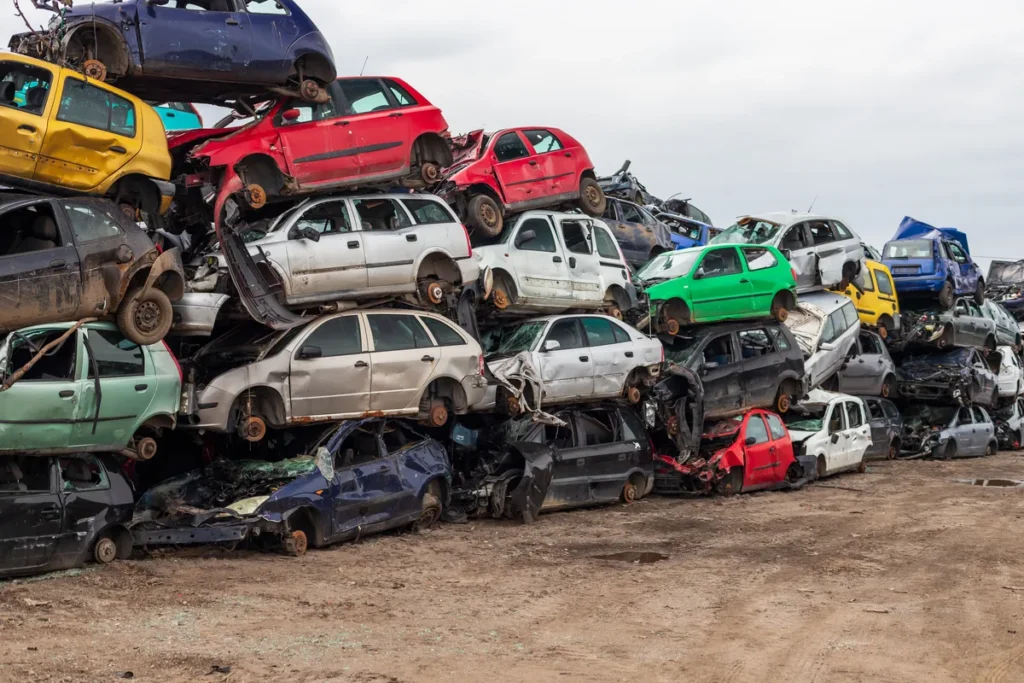
Quick answer: Scrap car prices in Pennsylvania are quoted per ton and move with the global steel market — typically roughly $120 to $250+ per ton for a complete junk vehicle, depending on current demand. A 2-ton car therefore has a metal value in the low hundreds of dollars before adjustments. But a running or parts-worthy car is usually worth more than its scrap weight alone, which is why a whole-car cash offer often beats a straight per-ton calculation. Because rates change weekly, the reliable way to know your number is a current offer.
How Per-Ton Scrap Pricing Works
Scrap yards buy end-of-life vehicles largely for the metal they contain, and they resell that metal by the ton — so that is how they price it. A typical passenger car of about 2 tons, at a scrap rate of $150–$200 per ton, has a raw metal value in the low-to-mid hundreds of dollars before any adjustments for parts or condition. The per-ton rate itself is set by regional mills and the global commodity market, which is why it shifts from week to week and yard to yard.
Typical Scrap Price Ranges (and Why They Move)
| Factor | Effect on price |
|---|---|
| Steel/mill demand | Higher demand raises per-ton rates |
| Global commodity markets | Scrap tracks broader metal pricing |
| Local yard competition | More buyers in a metro can lift offers |
| Fuel & transport costs | Higher costs reduce what yards net |
| Vehicle completeness | Stripped cars fetch less than complete ones |
Because of this volatility, a per-ton figure you saw last month may be off today. Always price against a current quote rather than an old number.

Scrap Value vs. Real Offer: The Important Difference
Per-ton scrap value is the floor, not the ceiling. Two things frequently push your payout above raw scrap weight:
- Usable parts — a good engine, transmission, catalytic converter, wheels, or body panels add value beyond metal.
- Running condition — a car that starts and drives can be resold rather than crushed, which raises its worth.
This is why a whole-car cash offer frequently beats a pure scrap-per-ton calculation. A buyer who resells parts or vehicles can pay more than a yard that only recovers metal — the difference goes to you.
What Your Car Is Actually Made Of
Understanding the metal mix helps explain the price. The bulk of a car is steel, which sets the baseline per-ton value. But vehicles also contain aluminum (often in wheels, engine components, and some body panels), copper (in wiring and the radiator), and — most valuably — the platinum-group metals in the catalytic converter. A converter that is still attached can add meaningfully to an offer, which is one reason keeping the car complete pays off.
Getting the Best Scrap Price in Pennsylvania
To maximize your payout: know your vehicle’s year, make, and model; note what still works; keep the car complete rather than stripping it; and get a current offer instead of relying on a stale per-ton figure. CashSellCar’s Pennsylvania service makes cash offers that account for both scrap and resale value, with free towing on eligible accepted offers statewide, subject to vehicle details and pickup access. Sellers in southwestern PA can compare local details on the Allegheny County page, and Pittsburgh-area sellers can use the Cash for Cars Pittsburgh page.

A Realistic Expectation
For a complete, non-running car with no special parts value, think in terms of scrap weight times the current per-ton rate — low hundreds of dollars for a typical sedan. For a car with a working drivetrain, an intact catalytic converter, or in-demand parts, expect more. The only way to know your exact number today is a live offer, because both the scrap rate and your car’s resale value change over time.
Scrap Value by Metal Type
Not all the metal in your car is worth the same per pound. Understanding the mix explains why offers vary:
- Steel — the bulk of the vehicle; sets the baseline per-ton value.
- Aluminum — wheels, some engine parts, and certain body panels; worth more per pound than steel.
- Copper — wiring harnesses and the radiator; among the higher-value common metals.
- Platinum-group metals — inside the catalytic converter; the single most valuable small component in most cars.
A yard that only pays the steel per-ton rate captures less of this than a buyer who values the converter and non-ferrous metals, which is another reason a whole-car offer can exceed a flat scrap quote.
How to Read a Scrap Quote
When you get a per-ton scrap quote, ask what it includes. Some yards quote a “delivered” price that assumes you tow the car there yourself; once you factor in the cost or hassle of transport, the net can be lower than a whole-car offer that includes free towing. Also ask whether the quote is for the complete vehicle or a stripped shell, and whether the catalytic converter is included in the price. Comparing apples to apples — complete car, towing included — is the only way to know which option actually pays you more.

Seasonal and Market Patterns
Scrap prices are not random; they follow broader industrial cycles. Periods of strong construction and manufacturing demand tend to lift steel and scrap rates, while slowdowns soften them. Global events that affect metal supply chains ripple through to local yards. You cannot time the market precisely, and for most sellers it is not worth trying — a car losing value to rust while you wait for a better scrap week usually costs more than any price bump you would capture. Getting a current offer and acting on it is generally the smarter play.
Whole Car vs. Parting It Out
Some owners wonder whether they would earn more by selling parts individually and scrapping the shell. Occasionally that is true for a valuable, in-demand model — but it involves real labor, storage, listing, shipping, and the risk of parts that never sell. For the large majority of junk vehicles, a single whole-car cash offer nets more per hour of your time and eliminates the hassle. Selling the complete car, catalytic converter attached, is simpler and usually competitive with the piecemeal route once you value your effort honestly.
Regional Scrap Pricing Across Pennsylvania
Scrap rates are not identical statewide. Metro areas with more yards and closer proximity to steel mills — the Pittsburgh region, with its deep steel-industry roots, and the Philadelphia corridor — often see competitive pricing because buyers compete and transport distances to mills are shorter. More rural parts of the state can see slightly lower net offers once hauling costs are factored in, since the metal has farther to travel. This is another reason a whole-car cash offer with free towing can beat a local yard’s per-ton quote: you are not absorbing the transport cost that distance would otherwise add.
Questions to Ask Before Accepting a Scrap Offer
- Is towing included? A per-ton yard price that requires you to deliver the car is not comparable to an offer with free pickup.
- Is the catalytic converter counted? Confirm whether the offer values the converter or assumes it is removed.
- Is this for the complete car? A quote for a stripped shell is lower than for a whole vehicle.
- Is the price firm at pickup? Watch for offers that shrink on arrival citing “unexpected” issues.
- When and how do I get paid? A reputable buyer pays the agreed amount at pickup.
Asking these up front turns a vague per-ton number into an apples-to-apples comparison and protects you from lowball surprises.
Why “Current Offer” Beats “Current Price”
People search for a scrap price per ton hoping for a fixed answer, but the honest reality is that your payout depends on two moving parts at once: the per-ton metal rate, which shifts with the market, and your specific car’s resale value, which depends on its parts and condition. A published price can tell you roughly where the metal market sits, but only a live offer accounts for both variables together. That is why the most useful step is not memorizing a per-ton figure — it is getting a current, vehicle-specific offer you can actually act on.
The Bottom Line on Scrap Car Prices in PA
Scrap car prices in Pennsylvania are quoted per ton and move with the global steel market, typically landing somewhere around $120 to $250-plus per ton for a complete junk vehicle — which puts a typical 2-ton car’s raw metal value in the low hundreds of dollars before adjustments. But that per-ton figure is only the floor. A running car, an intact catalytic converter, in-demand parts, and heavier construction all push your actual payout higher, which is why a whole-car cash offer frequently beats a metal-only scrap quote. Because rates change weekly and your car’s resale value is specific to the vehicle, no published price can tell you your exact number — a current offer can. When you compare options, make sure you are comparing like for like: complete car, catalytic converter included, and free towing, so a per-ton yard quote that assumes you deliver the car does not look better than it really is. Know the floor, understand what raises it, and act on a live offer rather than a stale figure.
Frequently Asked Questions
What are scrap car prices per ton right now in PA?
Rates typically fall in the range of roughly $120–$250+ per ton for a complete junk vehicle, but they change weekly with the steel market, so confirm with a current offer.
How much is a 2-ton car worth as scrap?
At a scrap rate of $150–$200 per ton, a 2-ton car’s metal is worth a few hundred dollars before adjustments — but usable parts or running condition can raise the offer above that.
What are the latest prices for scrap cars?
Scrap car prices track the global steel market and move week to week. Because they fluctuate, a current quote is more accurate than any published figure.
Why is my cash offer higher than the scrap-per-ton value?
Because scrap weight is only the floor. A working engine, catalytic converter, or resellable parts add value beyond the raw metal.
Do scrap prices really change that often?
Yes. Scrap tracks global metal markets and can move week to week, which is why a current quote beats an old per-ton figure.
Does removing parts get me more money?
Usually not. A complete car — especially with its catalytic converter — is often worth more as a whole than the sum of a stripped shell plus separately sold parts, and it is far less hassle.
Is the catalytic converter worth keeping on the car?
For most sellers, yes. An intact converter adds value to the offer, and selling it separately can raise legal and practical complications. Keeping the car complete is simpler.
Where can I get the best scrap price near me in PA?
Compare a current whole-car cash offer against local yard per-ton rates. A buyer who values both scrap and resale, with free towing, often nets you more than a metal-only yard.
Ready to see what your car is worth?
Get a real online offer with free towing and no obligation.
Get my instant offer

