
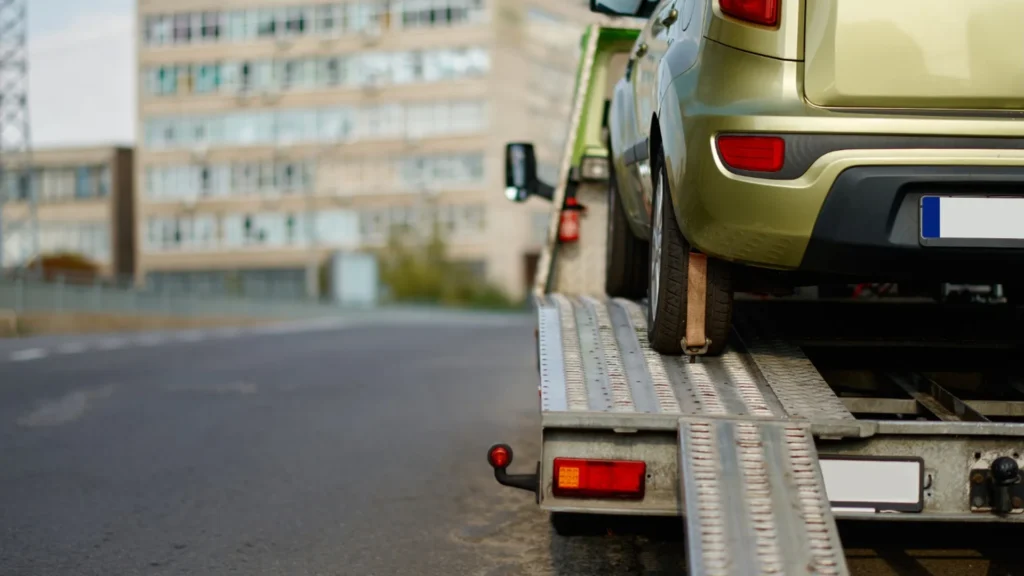
Quick Answer: Choosing between a dealer trade-in vs cash for cars in Maine depends largely on the condition of your vehicle. While a dealer trade-in can provide a state sales tax credit on your next purchase, traditional dealerships rarely accept cars with significant undercarriage rust, failed Maine State Police safety inspections, or serious mechanical issues. For older, damaged, or heavily rusted vehicles, a cash for cars service like CashSellCar offers a guaranteed sale, free towing, and no strict inspection requirements.
Deciding what to do with an aging, damaged, or simply unwanted vehicle often comes down to one primary comparison: dealer trade in vs cash for cars in Maine. While trading a car in at a local dealership can seem straightforward and offers potential tax benefits, Maine’s harsh winters and stringent vehicle inspection laws complicate the reality for many older vehicles. If your car has succumbed to winter road salt, failed its safety inspection, or is missing a title, a specialized cash for cars service might be your most viable—and profitable—option.
Navigating the automotive market in the Northeast requires a specific understanding of how local elements affect vehicle lifespan. A car that might be considered in “fair” condition in a southern state could be deemed a total loss in Maine simply due to the invisible decay happening underneath the floorboards. In this comprehensive guide, we will break down exactly how to evaluate your vehicle, understand state regulations, and make the best financial choice for your situation.
The Local Context: Why Selling a Car in Maine is Different
Maine is renowned for its beautiful landscapes, outdoor recreation, and unforgiving, prolonged winters. To keep roads safe and passable during severe snow and ice events, the Maine Department of Transportation (MaineDOT) utilizes extensive winter road treatments. According to official MaineDOT winter road salt and snow-and-ice guidance, thousands of tons of rock salt, liquid brine, and other de-icing chemical agents are applied to state roads and highways annually.
While these aggressive treatments are absolutely necessary to prevent accidents and keep the state moving, they wreak havoc on the structural integrity of vehicles. The constant, unavoidable exposure to road salt and liquid brine—which can penetrate deep into tight crevices that traditional rock salt cannot reach—leads to severe corrosion. This corrosion targets the undercarriage, brake lines, fuel lines, subframes, and rocker panels.
This localized phenomenon, often referred to as “Maine rust” or “New England rot,” isn’t just a cosmetic issue that makes a car look ugly; it’s a profound structural and safety hazard. Once rust takes hold in critical areas, repairing it requires cutting out the infected metal and welding in new steel, which is an incredibly labor-intensive and expensive process.
Because of this accelerated wear and tear, evaluating a dealer trade in vs cash for cars in Maine requires understanding exactly how traditional dealerships view rust and mechanical degradation. A dealership’s primary goal is to acquire vehicles they can easily recondition, detail, and quickly resell on their retail lot or send to a dealer-only auction for a profit. If a car requires extensive bodywork, frame repair, or complete brake line replacement just to be legally drivable, the dealership will either offer a shockingly low trade-in value or outright refuse to accept the vehicle.
How the Maine State Sales Tax Trade-In Credit Works
To make an accurate financial comparison, you must understand the primary advantage of utilizing a dealership. One of the biggest incentives for trading in a vehicle at a dealership is the Maine state sales tax trade-in credit.
When you trade your vehicle in to a registered dealer toward the purchase of another vehicle (new or used), the trade-in allowance is deducted from the purchase price of the new vehicle before the 5.5% Maine state sales tax is calculated.
For example, if you are buying a $25,000 car and the dealer gives you $6,000 for your trade-in, the math works as follows: you subtract the $6,000 from the $25,000, leaving $19,000. You are only required to pay the 5.5% sales tax on that $19,000 difference. This saves you exactly $330 in out-of-pocket tax expenses.
This tax credit is a powerful financial tool. For late-model vehicles that have been garage-kept, well-maintained, and remain in good condition, it often makes the dealer trade-in the most logical and lucrative choice. However, it is crucial to remember that this benefit only exists if the dealer is willing to accept your car and offer a reasonable, fair-market value for it.
If a dealer evaluates your vehicle, spots significant undercarriage rot, and only offers you $500 because they intend to send it straight to the scrapyard, your tax savings amount to a mere $27.50. In scenarios where a vehicle is heavily depreciated due to condition, the minimal tax savings rarely make up for the lowball offer. In such cases, selling the vehicle outright to a cash buyer could yield a significantly higher overall return in your pocket.
The Reality of Trading in a Car with Rust or Inspection Issues in Maine
In Maine, vehicle condition isn’t just an abstract concept related to curb appeal; it is heavily regulated by law enforcement. The Maine State Police oversees the state’s motor vehicle inspection program, which mandates a strict, annual safety check for all registered vehicles on the road.
The Impact of Maine State Police Inspection Rules
The Maine State Police inspection rules are thorough, uncompromising, and focus heavily on safety components that are frequently compromised by harsh winter driving conditions. Certified inspection mechanics are required to check the integrity of the vehicle’s frame, the condition of the entire exhaust system (including the catalytic converter), the suspension components (ball joints, tie rods, wheel bearings), the braking system (pads, rotors, and especially the metal brake lines), tires, and steering linkages.
If your vehicle has significant structural rust—such as holes rusted through the floorboards, a compromised or cracked frame, a leaking exhaust system, or severely corroded brake lines that are at risk of bursting under pressure—it will fail the safety inspection immediately. These are common afflictions for vehicles that are more than ten years old in Maine.
When you attempt to bring a car with a recently failed inspection sticker, an expired sticker, or known structural issues to a dealership, the trade-in appraisal will plummet. Dealerships cannot legally sell a car to a retail consumer if it cannot pass a state inspection without strictly disclosing those massive flaws and selling it as “tow away.” Most reputable dealerships prefer not to deal with these “mechanic specials” because they view these vehicles as massive liabilities that damage their brand reputation.
If you are comparing a dealer trade in vs cash for cars in Maine, remember that cash car buyers operate under a completely different business model. Services like CashSellCar specialize in purchasing vehicles exactly as they sit, regardless of their current inspection status, mechanical failures, or structural degradation.
Step-by-Step: Evaluating Your Car for Trade-In vs. Selling for Cash
To make an informed, emotionless decision between a traditional dealer trade-in and accepting a cash offer, follow this step-by-step evaluation process:
Step 1: Assess the True Condition of Your Vehicle
Take a hard, realistic look at your car. Does it start reliably every morning? Are there persistent dashboard warning lights on, such as the Check Engine or ABS lights? Most importantly, use a flashlight and look underneath the vehicle. Is there significant, flaking rust on the frame, exhaust, or suspension components? If your car has deep rust that flakes away when touched, a dealership will likely not want it.
Step 2: Check Your Inspection Status
When does your Maine State Police inspection sticker expire? If it is already expired, or if you know the car will absolutely not pass its next inspection due to needed repairs (like a $1,500 catalytic converter replacement or new tires all around), you must factor that impending cost into its current value.
Step 3: Get a Trade-In Estimate
Visit a local dealership or use an online valuation tool to get a baseline trade-in value. Be ruthlessly honest about the car’s condition when using online tools. If you mark a rusted car as “Good” online, the dealer will aggressively adjust the offer downward in person once their appraiser spots the undisclosed damage.
Step 4: Calculate the True Tax Savings
Take the actual, confirmed trade-in offer from the dealer and multiply it by 0.055 (Maine’s sales tax rate). This is your exact potential tax savings. Add this number to the trade-in offer to see the total financial benefit of utilizing the dealership route.
Step 5: Get a Cash Offer
Contact a specialized service like CashSellCar at 1-844-512-0697 or visit /how-it-works/ to get a free, no-obligation cash offer. We buy cars in virtually any condition—running perfectly, barely running, wrecked, rusted, or completely immobilized.
Step 6: Compare the Total Value and Convenience
Compare the total dealer benefit (the trade-in value plus the calculated tax savings) directly against the cash offer. Furthermore, you must consider the convenience factor. If the car isn’t currently running or is unsafe to drive, and you decide to trade it in, you will likely have to pay a tow truck $100-$200 just to transport it to the dealer’s lot. In contrast, cash for cars services almost universally provide free towing directly from your driveway, removing that hidden cost.
Decision Framework: When to Repair, Scrap, or Request an Offer
Sellers often face a frustrating dilemma: should I sink money into fixing this car, scrap it for parts, trade it in, or just sell it as quickly as possible for cash? Use this decision framework to guide your next steps:
When to Repair Your Vehicle:
- The cost of repair is less than one year of car payments. If spending $1,200 on a brake and suspension overhaul will allow your car to pass Maine inspections reliably for another two years, repairing it is usually the most financially sound decision compared to taking on a $400 monthly car payment.
- The vehicle is less than 10 years old and has low mileage. Retaining the value of a relatively new asset by fixing a mechanical issue is almost always worthwhile.
When to Pursue a Dealer Trade-In:
- Your car is in good to excellent overall condition.
- The vehicle easily passes the Maine safety inspection with no major advisories.
- You are simultaneously purchasing a new or newer used vehicle from that specific dealer. The convenience of completing a single transaction and securing the sales tax credit makes this the optimal route.
When to Request a Cash Offer (Cash for Cars):
- The car has significant rust damage. Dealerships heavily penalize rust; cash buyers expect it and price it accordingly.
- The vehicle cannot pass the Maine State Police safety inspection without thousands of dollars in repairs.
- The engine, transmission, or head gasket is failing or completely blown.
- The vehicle has been in a collision and the cost of repair exceeds the vehicle’s worth.
- You do not want to buy another car. If you are simply trying to downsize your household fleet or moving out of state, a trade-in tax credit is entirely useless to you.
- The car cannot be safely driven. A reputable cash buyer provides free towing, saving you the immense hassle, danger, and cost of moving a dead vehicle.
When to Scrap Your Vehicle Yourself:
- You have the time, heavy equipment, and mechanical knowledge to part it out. Selling individual components (like an engine, transmission, alternator, or catalytic converter) can sometimes yield a higher total return, but it requires significant physical labor, space to store a dismantled car, and the patience to deal with dozens of individual buyers on online marketplaces.
- You are prepared to strictly handle the environmental requirements. You must properly drain, catch, and dispose of all fluids (oil, coolant, brake fluid) according to Maine DEP regulations before most scrapyards will even allow you to drop off the bare metal shell.
Comparison Table: Dealer Trade-In vs Cash for Cars in Maine
| Feature | Dealer Trade-In | Cash for Cars (CashSellCar) |
|---|---|---|
| Best For | Newer cars, good condition, passing inspection | Older cars, rusted, damaged, failed inspection |
| Primary Financial Benefit | Maine State Sales Tax credit on next purchase | Guaranteed payment, regardless of next purchase |
| Vehicle Condition Required | Generally requires good running condition | Buys vehicles in “as-is” condition, running or not |
| Towing and Transport | Seller usually responsible if car doesn’t run | Free towing included from your location |
| Speed of Transaction | Tied to the complex timeline of buying a new car | Typically completed within 24-48 hours |
| Impact of Rust | Severely reduces value or causes outright rejection | Factored in, but does not prevent a guaranteed sale |
Navigating Title Rules with the Maine Bureau of Motor Vehicles (BMV)
Whether you ultimately choose a dealer trade-in or a cash buyer, you must possess the proper, legal documentation to transfer ownership. The Maine Bureau of Motor Vehicles (BMV) has specific, stringent rules regarding vehicle titles that you must follow to the letter.
The Critical 2001+ Title Rule
It is incredibly important to understand the current state laws, as they have recently shifted. Historically, Maine utilized a 15-year title exemption rule, meaning older cars could be legally sold with just a notarized bill of sale and a previous registration document. This has changed.
As of January 1, 2026, the Maine BMV strictly requires a certificate of title for any vehicle with a model year of 2001 or newer.
If your vehicle is a 2001 model or newer, you absolutely cannot trade it in to a licensed dealer, nor can you sell it to a reputable cash car buyer, without a valid, physical certificate of title in your name.
The Maine Duplicate Title Process
If you have lost, misplaced, or accidentally destroyed the title to your 2001 or newer vehicle, you must obtain a duplicate title before attempting to sell or trade it in. The Maine duplicate title process requires you to:
- Complete the Request for Duplicate Certificate of Title form (MVT-8).
- Have the form signed by all owners exactly as they were listed on the original title.
- Pay the required state fee (currently $33, plus an additional fee for rush processing if you need it expedited).
- Submit the form and fee directly to the BMV Title Unit in Augusta.
If there is an active lien on the vehicle (meaning a bank still holds an interest in the car), the duplicate title will automatically be mailed to the lienholder, not directly to you. You must ensure the loan is completely satisfied and a formal lien release is provided. A dealer will often handle a loan payoff for you if there is equity in the trade, but a cash buyer requires a clear title upfront. CashSellCar can guide you through the initial steps of obtaining a duplicate title or verifying your lien release status if you choose to sell your vehicle to us.
Environmental Responsibility: Maine DEP Motor Vehicle Recycling Rules
When vehicles reach the end of their usable life in Maine, they cannot simply be abandoned in a field, left in the woods, or parked indefinitely behind a barn. End-of-life vehicles pose a severe environmental risk to Maine’s pristine ecosystems due to the hazardous fluids and heavy metals they contain, including motor oil, antifreeze, brake fluid, transmission fluid, air conditioning refrigerants, and lead-acid batteries.
The Maine Department of Environmental Protection (DEP) enforces strict motor vehicle recycling rules to combat these risks. These complex regulations dictate exactly how licensed salvage yards and auto recyclers must handle, drain, store, and dispose of these toxic substances. Furthermore, specific protocols exist for the removal and safe storage of mercury switches (commonly found in older vehicle convenience lights) to prevent them from leaching neurotoxins into Maine’s soil and waterways.
When you trade a deeply flawed, failing car into a dealership, they almost always sell it at a wholesale auction, where it eventually trickles down through various buyers to a local dismantler. When you sell directly to a reputable cash for cars service, you are assured that the vehicle is routed immediately to licensed, compliant facilities that adhere strictly to Maine DEP motor vehicle recycling rules. Selling your junk car responsibly ensures that harmful chemicals are recovered safely, and scrap metals are recycled efficiently, minimizing your environmental footprint in the state.
Frequently Asked Questions (FAQ)
Do I need a title to trade my car in to a dealer in Maine?
Yes. As of January 1, 2026, the Maine BMV requires a title for all vehicles with a model year of 2001 or newer. Dealerships will not accept a trade-in, and reputable cash buyers will not purchase the car, without a clear title in your name.
Will a dealership take my car if it failed the Maine state inspection?
While some dealerships might accept it as a trade, they will offer a drastically reduced price. They cannot legally sell an uninspected vehicle to a retail customer without fully disclosing the defects, and repairing it eats directly into their profit margins. Many dealers will simply refuse a car with structural rust or serious safety failures.
How does the Maine sales tax trade-in credit work?
If you trade a car into a registered dealer when buying another car, the trade-in value is subtracted from the purchase price of the new car before the 5.5% state sales tax is applied. This lowers the total amount of tax you owe on the new purchase.
Is it better to trade in a rusty car or sell it for cash?
In Maine, if a car has significant rust—especially on the structural frame, subframe, or rocker panels—a dealership will usually offer very little, if they make an offer at all. A specialized cash for cars service expects this type of winter wear and will often provide a higher, real offer along with free towing.
What happens if I lost the title to my 2005 Honda Civic?
Because the vehicle is a 2005 model (newer than 2000), you must apply for a duplicate title through the Maine BMV using form MVT-8. You cannot legally sell it or trade it in without having the physical title in hand.
Do cash for cars companies charge for towing in Maine?
Reputable companies like CashSellCar provide completely free towing from your location in Maine. There are absolutely no hidden fees or transportation costs deducted from your final cash offer.
Can I sell my car if I still owe money on it to a bank?
Dealerships can process a trade-in with an active loan by rolling the negative equity into your new loan or applying the positive equity. Cash for cars services generally require you to pay off the loan entirely and obtain a formal lien release from the bank before they can purchase the vehicle.
Choose the Right Path for Your Vehicle Today
Understanding the distinct nuances of dealer trade in vs cash for cars in Maine is essential for making the most profitable, stress-free decision. While dealerships offer a highly convenient path and tangible tax benefits for newer, clean vehicles, they are rarely the best avenue for older, rusted, or damaged cars that struggle to comply with Maine’s tough inspection laws.
If you have a vehicle that is sitting idle in your driveway, consistently failing state inspections, or simply costing too much in repairs to keep safely on the road, CashSellCar offers a simple, straightforward alternative. We understand the harsh realities of Maine winters and the incredible toll they take on automotive integrity.
Ready to get a real offer for your vehicle?
CashSellCar provides fair valuations based on current scrap and parts markets, entirely free towing, and fast payment. We handle the logistical headaches and ensure your vehicle is processed legally and responsibly.
Contact us today at 1-844-512-0697 or email us at contact@cashsellcar.com. Find out more about our seamless process by visiting /how-it-works/ and let us turn your unwanted car into paid at pickup.
CashSellCar serves all of Maine with a straightforward process.
Sources used for this article:
- Maine Bureau of Motor Vehicles (BMV) – Title Requirements and Exemptions
- Maine State Police – Motor Vehicle Inspection Rules and Regulations
- Maine Department of Environmental Protection (DEP) – Motor Vehicle Recycling Regulations
- Maine Department of Transportation (MaineDOT) – Winter Road Maintenance and Salt Usage Guidance
Ready to see what your car is worth?
Get a real online offer with free towing and no obligation.
Get my instant offer