Short Answer: Coastal air and rust on Maine cars create a destructive cycle because year-round salt spray from the Atlantic mixes with harsh winter road treatments to rapidly accelerate oxidation. This constant exposure to moisture and salinity aggressively eats through rocker panels, subframes, and brake lines, drastically shortening vehicle lifespans in coastal communities and often leading to costly safety inspection failures.
Living in the Pine Tree State offers incredible natural beauty, but it also comes with a unique set of challenges for vehicle owners. If you live or commute near the coast in towns like Boothbay Harbor, Belfast, Rockland, or Bar Harbor, your vehicle is under constant attack from the elements. The combination of ocean moisture, ambient salt air, and aggressive winter road treatments creates the perfect storm for vehicle corrosion.
Understanding the impact of coastal air and rust on Maine cars is essential for every vehicle owner. Whether you are trying to preserve your daily driver, dealing with a vehicle that just failed its annual safety inspection, or trying to figure out what to do with a rusted-out driveway ornament, this guide will help you navigate your options.
The Brutal Reality of Coastal Air and Rust on Maine Cars
In most parts of the country, vehicle rust is strictly a winter phenomenon. However, in coastal Maine, rust is a year-round threat. The Atlantic Ocean continuously churns up a fine mist of saltwater that is carried inland by coastal breezes. When this salty moisture settles on the exposed metal of your vehicle, it acts as a highly effective electrolyte, accelerating the chemical reaction between iron, oxygen, and water known as oxidation (rust).
But the coastal air is only half the battle. When winter arrives, the Maine Department of Transportation (MaineDOT) utilizes extensive snow-and-ice control methods to keep the roads safe. This often involves applying rock salt and liquid brine solutions to the pavement. When you drive, your tires kick this concentrated salt mixture up into the undercarriage of your car, forcing it into crevices, frame rails, and suspension components.
The result is a double-sided assault. The ambient coastal air attacks the visible body panels, window tracks, and roof seams from above, while the winter road salt relentlessly attacks the structural components from below. This is why a vehicle that might last 20 years in a dry, inland climate can suffer catastrophic structural failure in half that time along the Maine coast.
Common Rust Hotspots on Maine Vehicles
When inspecting a vehicle that has spent years in the coastal Maine environment, certain areas are almost guaranteed to show signs of corrosion. Knowing where to look can help you catch rust early or understand why a vehicle may no longer be safe to drive.
- Rocker Panels and Cab Corners: These are the lowest painted parts of the vehicle body and take the brunt of road spray. They are notorious for trapping moisture and rotting from the inside out.
- Frame Rails and Subframes: The structural backbone of trucks and SUVs. Boxed frames, in particular, can trap salt, sand, and moisture inside the rails, causing them to rot and eventually compromise the vehicle’s structural integrity.
- Brake and Fuel Lines: Most factory brake and fuel lines are made of steel. When they are exposed to coastal air and road salt, they corrode rapidly. A blown rusty brake line is a common and highly dangerous failure on older Maine vehicles.
- Exhaust Systems: The constant cycle of extreme heat and cooling, combined with external salt exposure, causes mufflers, catalytic converter flanges, and exhaust piping to rust out frequently.
- Wheel Arches and Fenders: Salt and mud get packed behind the wheel well liners, holding moisture directly against the sheet metal and causing the iconic “fender bubbling” seen on many older cars.
Is It Just Surface Rust or Structural Rot? (A Decision Framework)
Not all rust is created equal. Before deciding whether to sink money into repairs or cut your losses, you need to understand the severity of the corrosion. Use this framework to assess the damage:
| Rust Stage | Visual Characteristics | Safety Impact | Recommended Action |
|---|---|---|---|
| 1. Surface Rust | Light orange or brown dusting, paint bubbling, no deep pitting. The metal underneath feels solid. | Minimal. Purely cosmetic at this stage, but will progress if ignored. | Repair: Sand down to bare metal, apply rust converter, prime, and repaint. Wash frequently. |
| 2. Scale Rust | Flaking, thick layers of rust. The surface is pitted and rough. Paint has completely chipped away. | Moderate. The metal is actively degrading. Components may be weakened. | Evaluate: Professional intervention is required. Wire brushing and heavy rust encapsulator needed. Consider the vehicle’s overall value. |
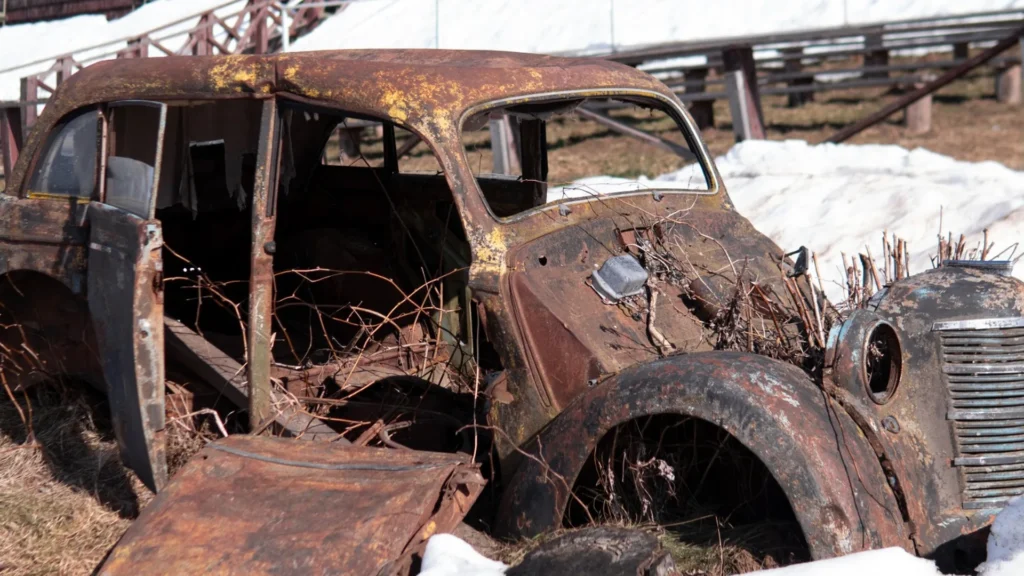
| 3. Penetrating Rot | Visible holes in the metal. The steel yields or crunches when tapped with a hammer. Flaking chunks. | Severe. If present on the frame, suspension mounts, or body structural points, the vehicle is unsafe. | Scrap/Sell: Repairs require cutting and welding in new steel, which often exceeds the value of the vehicle. Request an offer. |
The “Screwdriver Test”
If you are unsure whether rust on a frame rail or structural component is scale rust or penetrating rot, mechanics often use a simple test. If you can push a screwdriver through the rusted metal with moderate force, or if hitting the frame with a hammer produces a dull thud and a shower of rust flakes instead of a sharp ring, the structural integrity is compromised.
Repair, Scrap, or Request an Offer?
Making the call on a rusty car is a balancing act between safety, repair costs, and the vehicle’s remaining value. Here is how to decide your next move.
When You Should Repair
If your vehicle is relatively new, mechanically sound, and the rust is confined to cosmetic surface areas (like a scratch that started rusting or mild bubbling on a wheel arch), it makes financial sense to repair it. Catching it early and having a body shop address the surface rust can extend the life of the vehicle and preserve its resale value. Additionally, applying undercoating or fluid film treatments before winter can slow down future corrosion.
When You Should Scrap or Request an Offer
You should strongly consider selling your car to a specialized buyer like CashSellCar when:
- It Fails Maine State Police Safety Inspection: The Maine State Police oversee the state’s vehicle inspection program. Vehicles will fail inspection if there are jagged rust edges that could injure pedestrians, rust holes that allow exhaust fumes into the passenger cabin, or any structural rot on the frame, subframe, or suspension mounting points.
- Repair Costs Exceed Value: If a shop quotes you $3,000 to weld a new subframe into a car that is only worth $2,500, the vehicle is economically totaled.
- Brake Line Failure: If the hard steel brake lines have rusted through and burst, the rest of the undercarriage is likely in terrible shape as well. Replacing all the lines is an expensive, labor-intensive job.
- Safety is Compromised: If you feel unsafe driving the vehicle because of excessive structural rot, it is time to let it go.
Step-by-Step: How to Sell Your Rusted Car in Maine
If the coastal air and rust on your Maine car have finally won the battle, selling it doesn’t have to be a headache. CashSellCar specializes in buying vehicles in less-than-perfect condition, including those suffering from severe coastal corrosion. Here is the exact process.
Step 1: Assess the Vehicle and Gather Documentation
First, determine the year of your vehicle. This is critical for Maine sellers. Important Title Rule: As of January 1, 2026, the Maine Bureau of Motor Vehicles (BMV) requires a certificate of title to sell any vehicle with a model year of 2001 or newer. The old 15-year title exemption rule has been updated, so do not assume you can sell a 2005 vehicle with just a bill of sale. If you have lost the title, you must apply for a duplicate title through the Maine BMV before selling.
Step 2: Request Your offer
Contact CashSellCar. You can call us directly at 1-844-512-0697 or email us at contact@cashsellcar.com. Be honest about the condition of the vehicle. Tell us if the frame is completely rotted out, if it failed inspection, or if it can’t be driven. We buy cars in all conditions, and accurate information ensures your offer is guaranteed.
Step 3: Clear Out the Vehicle and Remove Plates
Before the tow truck arrives, remove all personal belongings from the cabin and trunk. In Maine, license plates belong to the owner, not the vehicle. You must remove your Maine license plates before the vehicle is towed away. You can transfer these plates to a new vehicle or return them to your local municipal office or BMV branch.
Step 4: Arrange Free Towing
We understand that rusted-out cars often have flat tires, seized brakes, or are parked in difficult-to-access coastal driveways. CashSellCar provides free towing, and our dispatchers will work with you to ensure our operators can safely recover the vehicle, regardless of where it is sitting.
Step 5: Get Paid at Pickup
When our local tow operator arrives, they will verify the paperwork (your ID and the required title for 2001+ vehicles). Once everything is confirmed, you get paid immediately. We handle the vehicle safely, ensuring all hazardous fluids are drained and processed in accordance with Maine Department of Environmental Protection (DEP) motor vehicle recycling rules.
Maine Vehicle Title and Inspection Rules You Need to Know
Selling a junk or rusty car in Maine involves specific state regulations. Here is what you need to keep in mind to ensure a smooth, legal transaction.
The Maine Title Requirement (Updated for 2026)
As mentioned above, the rules regarding titles in Maine have strict year cutoffs. For a long time, Maine was known as a state that did not require titles for older vehicles, often citing a 15-year rule. This is no longer true in the way many think. As of January 1, 2026, any vehicle that is model year 2001 or newer must have a valid certificate of title to transfer ownership, even if it is being sold for scrap. If your vehicle is a 2000 or older model, a proper Bill of Sale accompanied by previous registration documents may suffice, but for the vast majority of cars on the road today, a title is mandatory. If you need a duplicate, you must submit an Application for Duplicate Title (form MVT-8) to the BMV.
Maine State Police Inspection Standards
Maine requires annual safety inspections. The Maine State Police guidelines are strict regarding rust. Your vehicle will fail if:
- Rust holes are present in the floor pans or trunk, potentially allowing carbon monoxide from a leaky exhaust to enter the cabin.
- Body panels have rusted to the point of creating sharp, protruding edges.
- The structural integrity of the frame, unibody, or suspension components is compromised by penetrating rot.
Once a vehicle fails for structural rust, it is rarely cost-effective to fix, making a service like CashSellCar your best option.
Environmental Responsibility (Maine DEP)
Rusted cars are prone to leaking hazardous fluids—oil, transmission fluid, coolant, and brake fluid. The Maine Department of Environmental Protection (DEP) has strict regulations regarding the dismantling and recycling of end-of-life vehicles to prevent these chemicals from leaching into the soil and coastal waterways. When you sell to CashSellCar, you have the peace of mind knowing the vehicle will be handled and depolluted through properly licensed channels.
Frequently Asked Questions (FAQ)
1. How fast does coastal air cause rust on Maine cars?
If a vehicle has exposed metal (such as a deep scratch or dent) and is parked near the coast in a town like Belfast or Boothbay Harbor, surface rust can begin forming within a matter of weeks. Structural rot takes years, but constant exposure to salt air significantly accelerates the timeline compared to inland environments.
2. Will my car fail a Maine safety inspection for rust?
Yes, it very likely will if the rust is severe. While surface rust on a fender won’t cause a failure, rust holes in the floorboards, jagged metal edges on the body, or rotting on the frame and suspension mounts are automatic safety failures under Maine State Police inspection guidelines.
3. Do I need a title to sell my rusty car in Maine?
Yes, for almost all modern vehicles. As of January 1, 2026, the Maine BMV dictates that any vehicle model year 2001 or newer must have a title to be sold or transferred, even if it is being sold for scrap. You can no longer rely on the old “15-year exemption” for these newer models.
4. Can I sell a car that is completely rusted out and won’t drive?
Absolutely. CashSellCar buys vehicles in all conditions, including those with broken brake lines, seized wheels, or catastrophic frame rot. We provide free towing to safely remove the vehicle from your property.
5. Does washing my car in the winter actually help prevent rust?
Yes, frequent washing is one of the best defenses against MaineDOT road treatments. Be sure to use a car wash that includes an undercarriage spray to flush the accumulated salt brine out of your frame rails and suspension components.
6. How does CashSellCar value a vehicle with severe frame rot?
When a vehicle has severe frame rot, its value is primarily based on the current scrap metal market and the value of any salvageable, non-rusted components (like the engine block, transmission, or clean interior parts). We offer competitive, guaranteed pricing based on these factors.
Sell Your Rusted Maine Car to CashSellCar Today
Dealing with a vehicle that has been consumed by coastal air and rust on Maine cars can be frustrating. When repair costs outweigh the value of the car, or when it fails a safety inspection due to structural rot, it’s time to move on.
CashSellCar provides a simple, secure, and hassle-free way to sell your rusted vehicle. We understand the specific challenges Maine residents face, from strict inspection laws to navigating BMV title requirements.
What CashSellCar Does: We provide real offers, handle the towing for free, and pay you at pickup.
What You Need: Your ID, the keys, and the vehicle’s title (mandatory for 2001 and newer models).
What Happens at Pickup: Our driver verifies your paperwork, hands you your payment, and safely tows the rusted vehicle away.
What You Should Verify: Always remember to remove your personal belongings and your Maine license plates before the tow truck arrives.
Don’t let a rotting car ruin your driveway or risk environmental fines. Get your offer today.
Contact CashSellCar:
- Phone: 1-844-512-0697
- Email: contact@cashsellcar.com
- Learn more about how it works or check out our other resources for Maine sellers.
Sources Used For This Article
- Maine Bureau of Motor Vehicles (BMV): Guidelines regarding vehicle titling requirements, duplicate title applications (MVT-8), and the mandatory title rules for 2001 and newer vehicles.
- Maine State Police: Motor vehicle safety inspection rules and standards regarding structural integrity and body condition.
- Maine Department of Environmental Protection (DEP): Environmental regulations and best practices for the safe dismantling and recycling of end-of-life motor vehicles.
- Maine Department of Transportation (MaineDOT): Information regarding winter road maintenance, snow-and-ice control methods, and the application of salt and liquid brines.
Ready to see what your car is worth?
Get a real online offer with free towing and no obligation.
Get my instant offer