
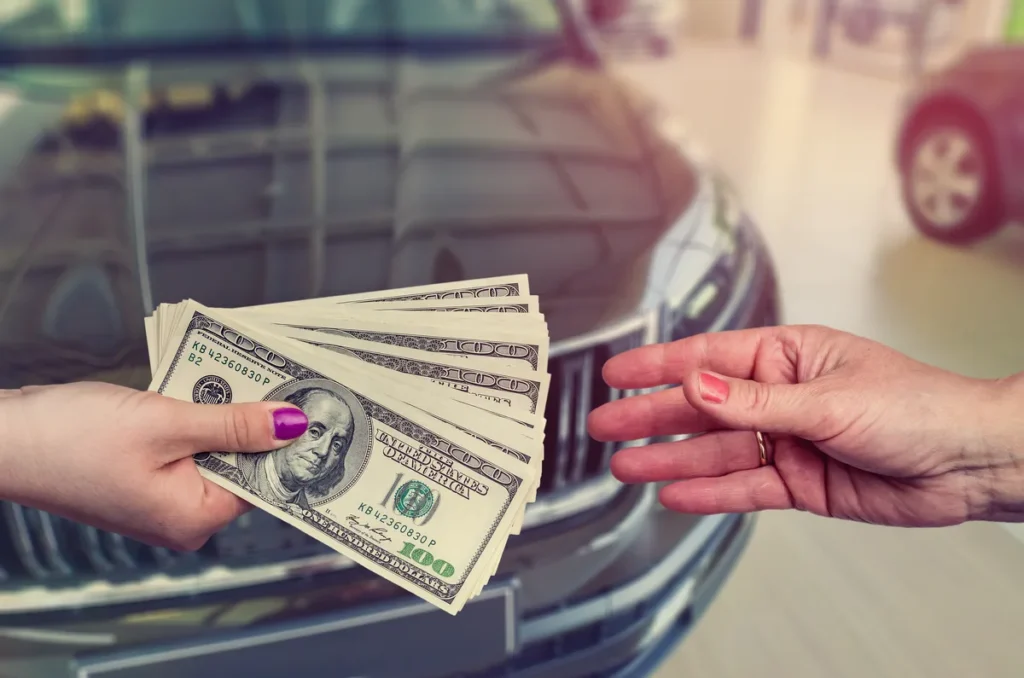
Quick answer: Most Pennsylvania cash-for-cars buyers are legitimate businesses, but a minority run predictable schemes: a high quote on the phone that drops sharply on arrival, pressure to sign a blank title, payment promised “later”, and no bill of sale. The single most reliable protection is to get the quote in writing with the vehicle’s details, refuse to sign an open title, and take payment before the car is loaded. A car on a truck is far harder to negotiate about than a car in your driveway.
The Bait-and-Switch Quote
This is the most common tactic by a wide margin. You describe the car honestly, receive an attractive number, and arrange collection. The driver arrives, inspects the vehicle, and the price drops for reasons you already disclosed — it does not run, it has rust, the tires are flat.
The tactic works because of timing. By the time the truck is in your driveway you have taken time off, cleared the space and mentally sold the car. Accepting a lower figure feels easier than starting again.
The defence is straightforward: get the quote in writing, with the year, make, model, and the condition you described. If the number changes for something already disclosed, that is not a revised valuation, and you are entitled to decline.

The Open Title Request
Some buyers ask you to sign the title and leave the buyer’s section blank. Never do this.
An open title lets the vehicle be passed on without the transfer ever being recorded, which means it stays associated with your name. If it is later dumped, or accumulates tickets and tolls, those route back to you.
Pennsylvania requires the assignment to be notarized in any case, which exists partly to prevent exactly this. A buyer pressing you to sign in advance is asking you to bypass a protection that is there for your benefit.
Payment Games
- “We’ll mail you a cheque.” Payment should happen at collection.
- “The office will call you tomorrow.” It will not.
- Partial payment now, balance later. The balance rarely arrives.
- A cheque from an unrelated name. Ask why before the car moves.
- Payment “once we’ve processed the title.” Not standard.
The rule is simple: the car does not leave until you have been paid in full. Once it is gone, your leverage is gone with it.
The Phantom Towing Fee
In an ordinary junk car sale, removal is included and the quoted figure is what you receive. A deduction on arrival for “towing” on a normal driveway pickup is a renegotiation dressed as a cost.
Genuine exceptions exist — a vehicle needing recovery from a ravine or a collapsed structure — but an honest operator raises those before dispatching, not at your door. See junk car towing in Pennsylvania.

Warning Signs Before You Book
| Signal | What it suggests | What to do |
|---|---|---|
| Quote given without asking about the car | Number is not real | Ask for it in writing |
| No business name or address | Hard to hold accountable | Verify before booking |
| Cannot say where the car goes | May not be licensed | Ask directly |
| Wants the title signed in advance | Avoiding the transfer record | Refuse |
| Vague about payment timing | Payment may not come | Insist on collection-day payment |
| Pressure to decide immediately | Preventing comparison | Get another quote |
Questions Worth Asking
Two questions separate established operators from the rest, and both should be answered without hesitation:
“Are you a licensed Pennsylvania buyer, and what happens to the title record?” A legitimate business explains its process immediately.
“What paperwork will I sign, and what do I keep?” The answer should include a bill of sale for you.
Vagueness on either is the signal. It is not rudeness to ask — it is the same diligence you would apply to any transaction involving a titled asset.
The “We Take Cars Without Titles” Advertisement
You will see these. Some are legitimate businesses that will help you resolve the paperwork. Others are not, and the ones that are not create real exposure for you, because the vehicle stays linked to your name.
Pennsylvania is a strict title state and there is no lawful shortcut around it. If you genuinely lack a title, fix that first — see junking a car without a title in Pennsylvania.
Protect Yourself on Collection Day
- Remove the license plate before the car leaves.
- Get a bill of sale naming the vehicle by VIN.
- Photograph the car on the truck and the completed paperwork.
- Confirm payment has cleared or is in hand.
- Keep a copy of the assigned title.
- Do not hand over keys until everything above is done.
None of this is adversarial. A professional operator expects it and has the paperwork ready.

Comparing Quotes Properly
Two or three quotes is the most effective protection available, and it costs nothing but a few minutes. The difficulty is making them genuinely comparable.
Describe the car identically to each buyer — same details about whether it runs, whether the converter is present, what has been removed, and where it is parked. A quote based on a rosier description is not a better offer, it is a different question.
Then confirm what each figure includes. Is removal covered? Is that the amount in hand? When is payment made? An apparently higher number that arrives with a towing deduction is lower than a modest quote paid in full.
Why Legitimate Buyers Ask So Many Questions
It can feel like an interrogation, and it is worth understanding why it happens. A licensed buyer has to record what they took, from whom, and under what title, because their operations are auditable.
So the questions about your ID, the title, the lien and the VIN are not obstruction — they are the compliance that makes the transaction safe for you. The operator who asks nothing and wants a blank title is the one creating your exposure, not the one with a clipboard.
If Something Has Already Gone Wrong
Act quickly rather than hoping. Gather everything you have — the advertisement, messages, any paperwork, the plate number of the truck if you noted it.
If the vehicle left without payment or with an unrecorded transfer, report it to your local police department, and consider a complaint to the Pennsylvania Office of Attorney General’s consumer protection function. The sooner it is reported, the better the chance of resolution.
If the concern is that the title was never transferred, surrender or transfer your plate promptly. That is the step that limits ongoing exposure while the rest is sorted out.
The Quiet Risk of an Unrecorded Transfer
Most warnings here concern losing money. The longer-tail risk is different: a transfer that never gets recorded leaves the vehicle associated with your name indefinitely.
The consequences arrive months later and are tedious to unwind — toll invoices from a road you have not driven, parking citations from another city, or an abandonment notice for a car dumped somewhere. Each has to be disputed individually, and by then the operator who took the car may be untraceable.
Two habits prevent nearly all of it. Never release a car on a blank title, and deal with your plate at a scheduled time the vehicle leaves. The plate is the thread that connects the registration to you, and removing it limits the exposure regardless of what the buyer does afterwards.
Local Notes
Metro areas have more operators and therefore more of both kinds. Comparing two or three written quotes is easy in Philadelphia or Pittsburgh and worth doing anywhere. Our local guides cover areas including Philadelphia, Pittsburgh and Upper Darby, with the full list on our Pennsylvania page. County-level guidance is available for Delaware County and Montgomery County.
The Short Version
Get the quote in writing with the vehicle’s details. Never sign an open title. Take payment before the car is loaded, keep a bill of sale naming the VIN, and remove your plate. If a price drops on arrival for something you already disclosed, you are entitled to send the truck away.
Frequently Asked Questions
Is it normal for the price to drop when the driver arrives?
Not for anything you disclosed accurately. A legitimate buyer honours a written quote based on an honest description.
Should I ever sign the title before the buyer arrives?
No. Pennsylvania requires notarization, and a pre-signed open title leaves the vehicle associated with your name.
When should I be paid?
At collection, before the car is loaded. Promises of later payment are the most common way sellers lose out.
Is free towing genuinely free?
In a normal junk car sale, yes — removal is included and the quote is what you receive.
How do I check a buyer is legitimate?
Ask whether they are licensed, what happens to the title record, and what paperwork you keep. Look for a real business name and address.
What if a buyer offers to take the car with no title?
Be cautious. Pennsylvania requires a title, and a transfer that is never recorded leaves the vehicle linked to you.
What should the bill of sale include?
The date, both parties, the vehicle by VIN, the amount paid, and that it is sold as-is. Keep your copy.
Who do I report a problem to?
Your local police department, and the Pennsylvania Office of Attorney General’s consumer protection function. Report promptly.
Ready to see what your car is worth?
Get a real online offer with free towing and no obligation.
Ready to see what your car is worth?
Get a real online offer with free towing and no obligation.
Get my instant offer

