
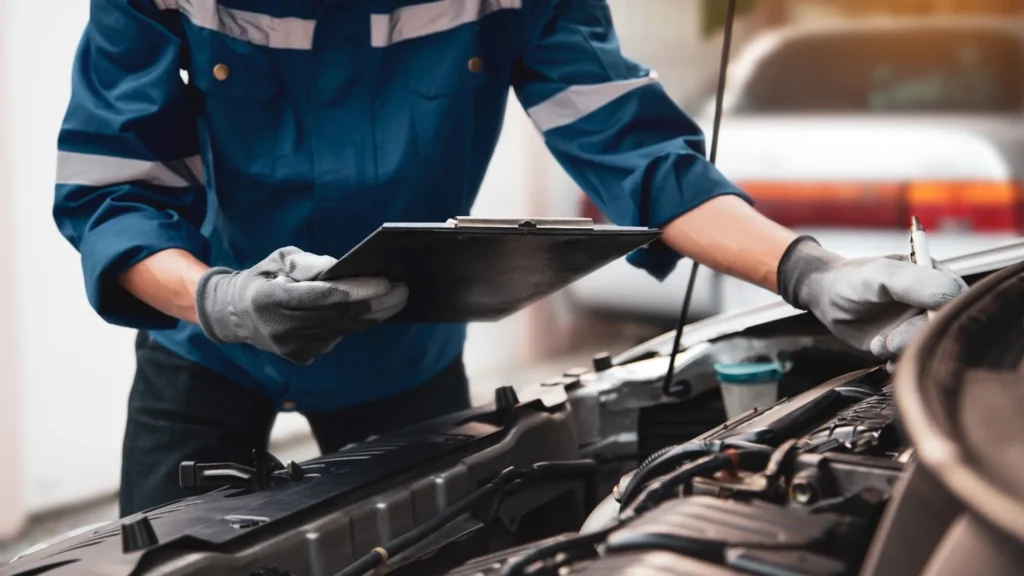
When balancing the Maine inspection cost vs car value, many drivers discover that a simple $12.50 sticker can quickly snowball into mandatory repairs exceeding $1,500. If your older vehicle is severely rusted, requires major suspension work, or needs expensive emissions fixes to pass the Maine State Police safety inspection, repairing it might not make financial sense. Instead of sinking money into a declining asset, evaluating your car’s true market value against the repair estimate will help you decide whether to fix it, scrap it, or request an offer to sell it for cash.
For many Maine residents, the annual inspection is a stressful time of year. You drop the car off hoping for a quick sticker swap, only to receive a dreaded phone call from the mechanic outlining a massive list of safety failures. Knowing how to navigate this situation practically and financially is crucial to avoid throwing good money after bad. This guide provides a clear framework to help you decide when a vehicle is worth saving and when it’s time to move on.
The Reality of Maine Inspections and Winter Roads
Every year, Maine residents take their vehicles in for what seems like a routine annual safety inspection. The inspection fee itself is a modest $12.50 for a standard safety check (or slightly more in Cumberland County where emissions testing is also required). But that initial sticker fee is just the cost of admission. The true cost of passing a Maine state inspection often reveals itself once the mechanic puts the vehicle on the lift and begins aggressively poking at the frame and undercarriage.
Maine’s harsh winters take a severe toll on vehicles. The Maine Department of Transportation (MaineDOT) utilizes extensive winter road salt, liquid brine, and snow-and-ice control materials to keep highways safe during blizzards and ice storms. While these treatments are absolutely necessary for driver safety on the roads, they create a highly corrosive environment for the undercarriage of your vehicle. Furthermore, Maine’s coastal climate adds salty ocean air to the mix, accelerating the oxidation process.
Over just a few seasons, this constant exposure to brine, rock salt, and moisture accelerates rust and deterioration. A vehicle that is mechanically sound and has a perfectly running engine can still fail a Maine State Police safety inspection due to compromised structural integrity. When rusted rocker panels, decaying subframes, or severely worn suspension components are flagged by the inspector, you are forced to make a difficult choice: pay the hefty repair bill to legally keep the car on the road, or walk away from the vehicle entirely.
Understanding the Maine State Police Safety Inspection Criteria
The Maine State Police strictly regulate the motor vehicle inspection program to ensure that all cars on the road meet fundamental safety standards. Licensed inspection mechanics are required to scrutinize numerous components, and a failure in any critical category means you cannot legally drive the car (except directly to a place of repair or your home) until it is repaired.
Key inspection areas that commonly cause expensive failures include:
1. Brakes and Suspension
Brake lines are highly susceptible to rust in Maine. Rusted brake lines that look damp or flaky, worn pads, scored rotors, or leaking calipers are automatic failures. Similarly, suspension components like ball joints, tie rods, control arms, and MacPherson struts must be solid. When a control arm rusts through or a ball joint has too much play, the vehicle is deemed unsafe at any speed. Replacing an entire rusted suspension corner can easily top $800 in parts and labor.
2. Body, Chassis, and Frame Structure
Rust holes in the floorboards or rusted-out structural supports are major safety hazards. The state mandates that the vehicle’s body and frame maintain their original structural integrity to protect occupants in the event of a crash. Patching a frame with Bondo or fiberglass is strictly prohibited for structural components; it requires professional welding and fabrication, which is incredibly labor-intensive and expensive. Often, the frame is too far gone to safely weld at all.
3. Exhaust Systems and Emissions
A rusted, leaking exhaust system not only fails safety checks but also poses serious carbon monoxide risks to the occupants. Furthermore, the vehicle must pass emissions standards (especially in Cumberland County). Replacing a rusted-out catalytic converter, muffler, and the associated sensors can quickly surpass a thousand dollars.
4. Tires, Glass, and Lighting
Adequate tire tread (at least 2/32 of an inch), an uncracked windshield in the driver’s line of sight, and fully functioning lights are non-negotiable. While replacing a bulb or a wiper blade is cheap, replacing four tires and a windshield can add $800 to your bill instantly.
When an inspector finds that a critical component is compromised—often due to the aforementioned winter road salt—the cost to replace it can be staggering. A $1,500 to $2,500 estimate for a new subframe, replacement brake lines, and a catalytic converter is not uncommon for a ten-year-old vehicle in Maine.
How to Evaluate Maine Inspection Cost vs Car Value
When handed a long list of required repairs to pass inspection, you must objectively evaluate the Maine inspection cost vs car value. Emotion often clouds judgment, especially if the car has been reliable or has sentimental value. However, treating the vehicle as a strict financial equation will save you from sinking into a money pit.
Step-by-Step Decision Framework
Follow these steps to determine whether to repair your vehicle, sell it for parts, or request an offer from CashSellCar:
Step 1: Determine the Vehicle’s Actual Cash Value (ACV)
Find out what your vehicle is currently worth if it were in passable, street-legal condition. Use trusted online valuation tools, check local classifieds, and be realistic about its cosmetic and mechanical state. If your car is worth $3,500 in passing condition, that $3,500 is your absolute ceiling.
Step 2: Get a Written Repair Estimate
Ask the inspection station for a detailed, itemized estimate of all repairs required to pass the Maine inspection. Make sure this estimate includes parts, labor, shop supplies, and taxes. Do not settle for a verbal “it’ll be around a grand.” Get it in writing so you can analyze the line items.
Step 3: Calculate the Repair-to-Value Ratio
Divide the total repair cost by the vehicle’s ACV.
- Example: A $1,800 repair estimate divided by a $3,500 ACV equals roughly 51%.
If the repair cost exceeds 50% to 60% of the vehicle’s total value, it is generally considered a poor financial investment to fix it. In insurance terms, a vehicle requiring repairs over 70% of its value is often considered a total loss.
Step 4: Factor in Future Reliability
Ask yourself honestly: If I fix these specific inspection issues, will the car last another year without other major problems? If the engine is burning oil, the transmission is slipping, or the heater core is leaking, the inspection repairs are just the tip of the iceberg. You are fixing the safety items but ignoring the mechanical ticking time bombs.
Step 5: Compare Your Final Options
Look at what you would get by selling the car in its current “failed inspection” condition versus what you would spend to keep it on the road for just one more year. Often, taking the cash now is far superior to spending your savings just to hit zero.
Checklist: When to Repair, Scrap, or Request an Offer
Use this comprehensive checklist to guide your decision-making process when dealing with a failed sticker:
[ ] Repair the Vehicle (The Fix It Route):
- The total repair cost is less than 30% of the car’s current value.
- The vehicle is structurally sound with only minimal surface rust, not rot.
- The required repairs are standard wear-and-tear items (e.g., tires, wiper blades, simple brake pads, a single tie rod).
- You know the engine and transmission are in excellent shape.
- You cannot afford to finance or purchase a replacement vehicle right now, and the repairs buy you significant time.
[ ] Scrap the Vehicle (The Junkyard Route):
- The frame is completely rusted out, compromised, and deemed entirely unsafe to repair.
- The vehicle has suffered catastrophic engine or transmission failure along with the inspection failure.
- The cost to tow it and fix it is substantially higher than its scrap metal value.
- Note: If you choose to scrap it yourself, ensure you comply with Maine Department of Environmental Protection (Maine DEP) motor vehicle recycling rules regarding hazardous fluid disposal, battery recycling, and freon extraction.
[ ] Request an Offer from CashSellCar (The Smart Route):
- The repair estimate is 50% or more of the vehicle’s value.
- The car runs and drives but failed inspection for expensive body rust, exhaust leaks, or complex suspension issues.
- You don’t want the extreme hassle of finding a private buyer who is willing to take on an uninspected project car.
- You want a fast, safe, hassle-free transaction without paying out of pocket for another tow truck.
The Hidden Costs of Failed Inspections
When you fail a Maine inspection, the financial burden isn’t just the repair estimate printed on the invoice. You must also consider the hidden costs of a failed inspection:
- Towing Fees: If your car is deemed completely unsafe to drive away from the inspection station (e.g., a brake line is about to burst), you may have to pay to tow it to another mechanic for a second opinion or back to your driveway.
- Rental Cars and Transportation: While your car sits at the shop waiting for expensive back-ordered parts or while you decide what to do, you still need to get to work. Rental cars, rideshare services, or coordinating rides quickly add up.
- Re-inspection Fees: While some Maine inspection stations offer a free re-inspection if you return within a specific timeframe (usually 14 days), missing that window means you will be paying the inspection fee all over again.
- Time, Stress, and Anxiety: Managing quotes, dealing with mechanics, and worrying about whether the car is truly safe is a significant mental tax that operators and vehicle owners often underestimate.
Navigating Maine Title Rules When Selling Your Car
If you decide that the Maine inspection cost vs car value equation doesn’t justify the repairs, selling the car is your logical next step. However, you must navigate the state paperwork correctly to ensure a smooth, legal transfer of ownership.
Many Mainers operate under outdated assumptions regarding vehicle titles. In the past, Maine was known for its 15-year title exemption rule, meaning older cars could be sold, registered, or scrapped with just a simple bill of sale and a previous registration. This rule has fundamentally changed.
According to the Maine Secretary of State and the Bureau of Motor Vehicles (BMV), as of January 1, 2026, all vehicles with a model year of 2001 or newer absolutely require a valid certificate of title for sale, transfer, or scrapping. Do not let a misinformed buyer or a shady junkyard tell you otherwise; operating without a title for a 2005, 2008, or 2010 vehicle will halt your sale entirely and can lead to legal complications.
Handling a Lost Title in Maine
If you have lost your title, it was destroyed in a move, or it has become illegible over time, you must follow the official Maine duplicate title process before you can sell your car.
- Obtain the Form: Complete the Request for Duplicate Title form (MVT-8).
- Prepare the Fee: Pay the required fee to the state (currently $33 for a standard duplicate title or $43 for rush processing).
- Submit the Application: Submit the form and fee to the Maine BMV main office in Augusta or at a local BMV branch office.
- Wait for Processing: Wait for the new title to arrive in the mail before attempting to sell the vehicle to CashSellCar or anyone else.
At CashSellCar, we are experts in title compliance. We require clear and proper documentation for every transaction. We ensure that our sellers are fully compliant with current Maine BMV regulations, protecting you from future liabilities, parking tickets, or toll fees that could occur if a vehicle is transferred improperly.
Trusting CashSellCar with Your Failed-Inspection Vehicle
When you are stuck with a car that failed inspection, you need a buyer you can trust. You need someone who understands rust, failed stickers, and the anxiety of dealing with a broken-down vehicle. Here is what CashSellCar provides and what you can expect from our straightforward process:
- What CashSellCar Does: We provide real offers for vehicles in almost any condition, including those that have completely failed Maine safety and emissions inspections. We handle the logistics, including free towing from your home, your workplace, or the mechanic’s lot.
- What the Seller Needs: You need a valid Maine title in your name (mandatory for all 2001 and newer vehicles), a valid state-issued photo ID, and the keys to the vehicle.
- What Happens at Pickup: Our professional, insured towing partners arrive at the scheduled time. They will verify your title and ID, hand you your payment securely, and carefully load the vehicle onto the flatbed or wrecker. The entire pickup process usually takes less than 20 minutes from start to finish.
- What the Seller Should Verify: Always verify that you have removed all personal belongings, trash, and important paperwork from the glovebox. You must remove your Maine license plates before the tow truck leaves. After the sale, you should promptly cancel your auto insurance and notify your local town or city office to stop paying excise tax on a car you no longer own.
We write like experienced operators because we are. We understand title headaches, failed inspections, the devastating effects of rust damage, towing access issues in narrow driveways, and the seller anxiety that comes with an unexpected breakdown. Our goal is to make the selling process as transparent, fair, and straightforward as possible for Maine residents.
Frequently Asked Questions (FAQ)
What happens exactly if my car fails inspection in Maine?
If your car fails, the certified inspector will cut your old inspection sticker in half (or remove it entirely) and provide a detailed list of necessary repairs. You generally cannot legally drive the vehicle on public roads, except directly to a repair facility or your home, until the safety issues are fixed and it passes a re-inspection.
Is it worth fixing a car that failed inspection strictly for rust?
It depends entirely on the extent of the rust and the car’s overall value. Surface rust on a fender is minor, but structural rust on the vehicle’s frame, subframe, spring mounts, or rocker panels can cost thousands of dollars to repair properly via welding. If the repair cost exceeds 50% of the car’s value, it is usually better to sell it.
Can I legally sell a car in Maine without a current inspection sticker?
Yes. You can sell a vehicle privately or to a licensed company like CashSellCar without a valid inspection sticker. The new owner will be responsible for obtaining a passing inspection before they can legally drive it on public roads.
Do I absolutely need a title to sell my junk car in Maine?
Yes. As of January 1, 2026, Maine law explicitly requires a title for all vehicles that are model year 2001 or newer. If you have lost your title, you must obtain a duplicate from the Maine BMV before selling. You cannot use just a bill of sale for a 2001+ vehicle.
Will CashSellCar tow my car directly from the mechanic’s shop?
Yes. If your car failed inspection and is sitting at a repair shop or dealership, we can arrange to have it towed directly from their lot at no cost to you. You simply need to have the title ready and ensure you have settled any diagnostic or storage bills with the mechanic beforehand.
How do you determine the value of a car that needs extensive repairs?
We evaluate the make, model, year, mileage, and current market demand for its parts and scrap weight. We then factor in the condition, including the specific failed inspection details you provide, to calculate a fair, competitive cash offer.
How fast can I get paid for my car after accepting an offer?
Once you accept our offer and provide the necessary title information, we can often schedule pickup within 24 to 48 hours. You get paid at the exact time of pickup, with no delayed checks or hidden fees.
Conclusion
Dealing with a failed safety sticker is a frustrating rite of passage for many drivers in the Pine Tree State. When the Maine inspection cost vs car value equation is no longer in your favor, it is time to stop pouring money into a depreciating, severely rusted vehicle. By understanding the rigorous Maine State Police safety criteria, recognizing the long-term impact of MaineDOT winter road treatments, and knowing the current BMV title laws, you can make an informed financial decision.
Don’t let a $12.50 inspection turn into a massive financial burden that drains your savings. If your repair estimates are too high, let us help you move on.
Ready to get a fair offer for your car?
Call CashSellCar at 1-844-512-0697 or email us at contact@cashsellcar.com.
Learn more about our simple, hassle-free process by visiting our How It Works page, or browse other Maine-specific advice and resources in our Maine Archive.
Sources used for this article:
- Maine State Police: Motor Vehicle Inspection Unit rules and safety criteria.
- Maine Secretary of State / Bureau of Motor Vehicles (BMV): Title requirements and duplicate title process.
- Maine Department of Environmental Protection (Maine DEP): Motor vehicle recycling and hazardous waste disposal guidelines.
- Maine Department of Transportation (MaineDOT): Snow and ice control operations and winter road treatment policies.
Ready to see what your car is worth?
Get a real online offer with free towing and no obligation.
Get my instant offer